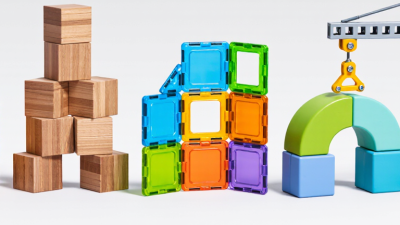
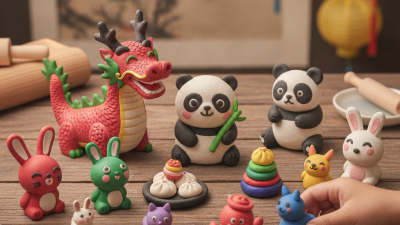
What are the best educational toys made in China? The answer depends on a child’s age, interests, and learning needs—not just a product label. China produces a broad range of Educational Toys, from wooden stacking blocks and magnetic tiles to science kits and pretend-play sets. Quality can vary between brands and even between product lines. Details matter.
A useful comparison looks beyond bright packaging. Check the recommended age, material information, small-part warnings, and care instructions. Look for clear manufacturer details and relevant safety test reports for the market where the toy will be sold. For hands-on products, inspect seams, edges, hinges, and how firmly pieces connect. A building set should feel sturdy in small hands; a puzzle should challenge without frustrating the child. These practical checks can reveal more than promotional claims.
Learning value matters, too. A strong toy encourages children to test ideas, solve problems, build language, or create stories, while leaving room for open-ended play. Reviews may help identify recurring issues, but a single glowing comment is not proof of lasting quality. No toy is perfect. Some kits look impressive yet need adult help, while simple blocks can invite hours of invention. The best choice balances safe, age-appropriate design with durable materials and meaningful play. In the sections ahead, we’ll explore popular types, key buying checks, and how to compare options with care.
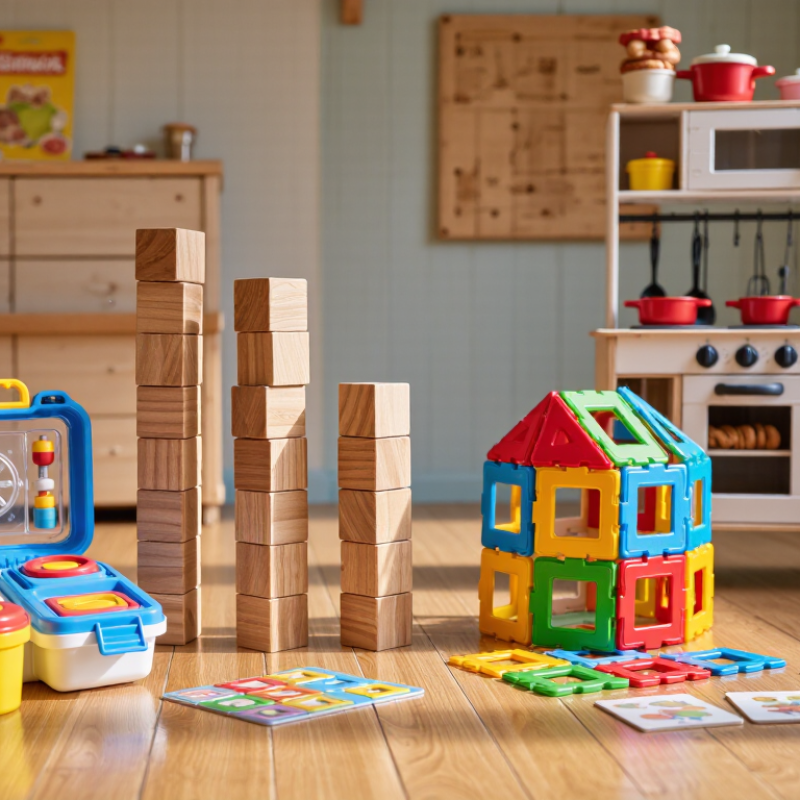
Educational toys are play materials designed to invite children to explore, practice skills, and solve simple problems. A wooden puzzle encourages shape recognition; stacking cups let toddlers test size, balance, and cause and effect. The toy is only part of the learning. A child may learn more when an adult waits, asks a gentle question, or joins the play without taking over. Play is serious work.
The American Academy of Pediatrics’ 2018 clinical report, “The Power of Play,” describes play as supporting language, social-emotional skills, and executive function, including working memory and self-control. These skills grow through repeated, hands-on experiences, not a single clever toy. Blocks can become a tower, a bridge, then a crash. That is useful learning, too. Adults can notice what a child tries next, rather than expecting every activity to go as planned.
Movement matters alongside thinking. The World Health Organization’s 2019 guidelines recommend that children aged three to four get at least 180 minutes of varied physical activity each day, including 60 minutes at moderate-to-vigorous intensity. Push-and-pull toys or simple obstacle games can support active exploration. This guidance is about daily movement, not a promise that any toy improves development. And children differ. A toy that delights one child may frustrate another; watch, adjust, and keep play safe and age-appropriate.
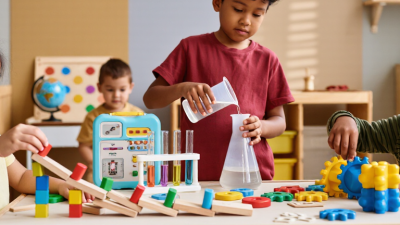
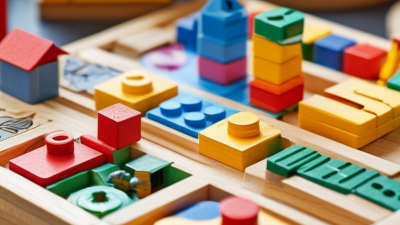
Educational toys made in China include building sets, puzzles, pretend-play kits, and simple science activities. Each type invites children to practice different skills. Stacking blocks can strengthen spatial reasoning and hand-eye coordination. A child who tests a bridge with heavier blocks is learning through trial and error.
Puzzles build attention, shape recognition, and persistence. Look for pieces that match a child’s current ability; a puzzle that is too difficult can turn practice into frustration. Pretend-play toys, such as a toy kitchen or market stall, encourage new vocabulary, turn-taking, and imaginative problem-solving. Small details help: pretend coins can prompt counting, while menus can inspire early reading. Play can be messy.
Basic science and construction kits can introduce sequencing, observation, and cause and effect. Children might connect parts, predict what will happen, then revise their design when it falls apart. That process matters more than getting a perfect result. Adult guidance helps, but too much can take over the child’s thinking. Check age guidance, small-part warnings, and clear instructions before choosing a set. A toy alone cannot teach every skill. Children differ, and even a well-designed activity may need a simpler start.
For educational toys made in China, material choice matters as much as the learning activity. Check whether wood finishes and painted surfaces have been tested for restricted chemicals, and whether plastic parts suit the child’s age and use. “Natural” does not automatically mean safe. Looks can mislead. Ask for batch-specific test reports covering the relevant requirements, such as China’s GB 6675 series, EN 71, or ASTM F963. A supplier’s general certificate may not identify the exact model or production batch. Independent testing by an ISO/IEC 17025-accredited laboratory offers stronger evidence.
Small parts, loose seams, sharp edges, and accessible battery compartments deserve close inspection. The U.S. Consumer Product Safety Commission estimated 154,700 toy-related emergency-department injuries among children aged 14 or younger in 2023. That figure covers toys broadly, not just products made in China, but it shows why physical design matters alongside chemical testing. The European Commission’s Safety Gate 2023 annual report recorded 3,412 product-safety alerts; toys accounted for about 13%. These alerts are not a measure of all toys sold, yet they underline the value of checking test dates, age labels, and traceable production details. I would still inspect a sample by hand: reports help, but they cannot reveal every weak snap-fit or rough corner.
What Are the Best Educational Toys Made in China?
Which Chinese-Made Educational Toys Suit Different Ages and Interests
For babies and toddlers, choose Chinese-made toys with simple shapes, easy-to-grip pieces, and clear age guidance. Nesting cups, textured blocks, and large-piece shape sorters encourage reaching, sorting, and experimenting. Small hands matter. For preschoolers, chunky puzzles, pretend-play sets, and magnetic building pieces can support storytelling and spatial thinking. Check that pieces are sturdy and appropriately sized; an attractive learning claim cannot replace careful inspection. For children aged six to nine, try beginner science kits, number games, or construction sets with illustrated instructions. Older children may enjoy programmable logic toys, model-building projects, or strategy games suited to their interests.
A toy’s country of manufacture does not tell you how well it teaches. Compare materials, instructions, age recommendations, and the child’s actual patience for the activity. The American Academy of Pediatrics’ 2018 clinical report describes play as important for children’s development, while Circana reported that U.S. toy sales fell 8% to $28.3 billion in 2023. Sales data reflects the market, not learning outcomes. That distinction is easy to overlook. I would also watch a child play before buying more: a complicated kit may sit untouched, even when its educational promise sounds convincing.
| Toy Type | Suggested Age | Interests It May Suit | Skills Encouraged | Typical Materials or Features | Buying and Safety Checks |
|---|---|---|---|---|---|
| Stacking cups and large nesting toys | About 6 months–3 years | Water play, sorting, stacking, and simple cause-and-effect play | Hand-eye coordination, grasping, size comparison, and early problem-solving | Often made from molded plastic or silicone, with pieces designed to nest or stack | For infants, choose pieces too large to pose a choking risk and check for smooth edges. Follow the age guidance on the packaging. |
| Shape sorters and large-piece puzzles | About 1–4 years | Matching shapes, colors, animals, or everyday objects | Shape recognition, spatial reasoning, vocabulary, and fine-motor control | May use wood, plastic, or thick board pieces with simple illustrated designs | Check that pieces are age-appropriate, securely finished, and free from splinters or loose components. |
| Building blocks and construction sets | About 3 years and up; smaller sets may be labeled for older children | Open-ended building, vehicles, structures, and imaginative play | Creativity, spatial thinking, planning, and basic engineering concepts | Common formats include interlocking plastic pieces, wooden blocks, and larger beginner pieces | Small construction pieces can be a choking hazard. Check the stated age range and keep them away from children who still mouth toys. |
| Magnetic building tiles | Often 3 years and up, depending on the product | Building 2D patterns and 3D shapes, especially for visual and hands-on learners | Geometry, symmetry, spatial reasoning, and creative experimentation | Usually plastic panels with enclosed magnets; shapes and set sizes vary | Inspect for cracks or separated panels. Swallowed magnets can cause serious injury; seek medical help immediately if a magnet may have been swallowed. |
| Abacus, counting frames, and number boards | About 4–8 years | Counting, number games, and early arithmetic practice | Number sense, one-to-one counting, pattern recognition, and concentration | May feature wooden or plastic frames with sliding beads or movable number pieces | Check that beads and parts are firmly attached, especially when the toy will be used by younger children. |
| Beginner coding and programmable robot toys | Often 5 years and up; instructions and complexity differ | Sequencing, puzzles, robotics, and screen-free or introductory coding activities | Logical thinking, sequencing, debugging, and following instructions | May include a programmable toy, direction buttons, cards, or a companion app | Check whether batteries, a phone, or an app are required. Review the app's privacy settings and supervise battery access. |
| Beginner science and experiment kits | Often 8 years and up, with adult supervision as indicated | Simple experiments, nature topics, observation, and hands-on discovery | Observation, measurement, prediction, and understanding basic scientific ideas | Contents vary and may include simple tools, activity materials, or experiment instructions | Read the full contents and safety instructions before use. Adult supervision may be needed; avoid kits with materials unsuitable for the child's age. |
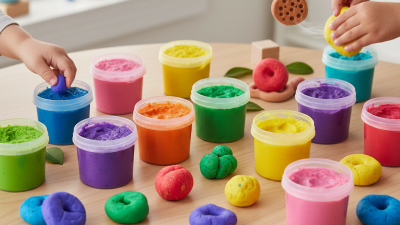
| Art and craft activity sets | About 3 years and up, depending on the tools and materials | Drawing, coloring, model-making, and creative projects | Self-expression, color recognition, fine-motor skills, and planning | May include crayons, washable paints, paper, modeling materials, or child-sized tools | Look for age guidance and clear material information. Supervise scissors and small accessories; use products intended for children's play. |
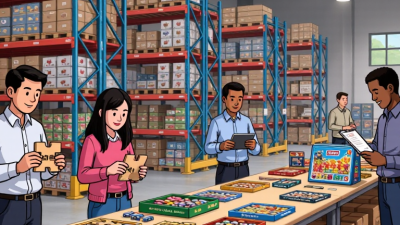
When comparing educational toys made in China, judge the individual product, not the country of manufacture. Ask for clear material details, age guidance, and relevant safety test documentation. Inspect a sample if possible: check for sharp edges, loose parts, peeling paint, and seams that split under gentle pressure. Small details matter. A polished photo cannot show how a puzzle piece feels after repeated use. Supplier documents are useful, but they do not replace checking the actual item or confirming that reports match its materials and design.
Learning value should be visible in what a child can do with the toy. A counting board might invite sorting, matching, and simple addition, while a building set can encourage planning and spatial reasoning. Look for instructions that support play without limiting it to one correct result. Claims such as “boosts intelligence” are hard to verify; specific skills are easier to assess. That sounds simple. It isn’t always. A toy can be educational and still frustrate a child if pieces are too small or instructions are unclear.
Compare total cost, not just the unit price. Include shipping, packaging, sample fees, and likely replacement parts. A cheaper item may have thinner cards or less consistent coloring across sets, though a higher price alone proves little. Request the same specifications and quantity from each supplier, then compare samples side by side. Keep a small allowance for quality checks; skipping them can be an expensive shortcut.
+86-754-86986185
David: info@yo-yo.net.cn
Susan: sales8@yo-yo.net.cn
Eunice: sales3@yo-yo.net.cn
Vincent: st88@sixtrees.cn
David: +86 13118683999
Susan: +86 13829657827
Eunice: +86 13809675407
Vincent: +86 13592830482