Top 10 Educational Toys for Kids in 2026

Choosing the right toy is less about flashy packaging and more about what a child can do with it. Top 10 Educational Toys for Kids in 2026 explores options that invite children to build, test, imagine, and try again. A wooden balance set may turn a kitchen table into a wobbly bridge. A beginner science kit can make a cup of water feel like a small discovery. These moments matter because children learn through active exploration, not simply by watching a toy perform.

Play researcher Dr. Stuart Brown has said, “The opposite of play is not work. It’s depression.” His observation is a useful reminder: play deserves space in a child’s day. This guide considers age suitability, durability, clear instructions, and opportunities for open-ended play. It also looks at how toys can support practical skills, from counting colorful blocks to sharing pieces during a cooperative game. No toy guarantees a particular outcome. Children differ, and an activity that delights one child may frustrate another.

The selections aim to help families compare purpose, materials, and play value before buying. Some toys teach through structured challenges; others leave room for a child’s own rules. Both approaches can be useful. Still, educational labels are not proof of quality. A crowded feature list may distract from a simple question: will the child want to return to this toy tomorrow? That is worth considering. The best choice often fits the child, the available space, and the kind of play caregivers want to encourage.
Top 10 Educational Toys for Kids in 2026

What Makes a Toy Educational in 2026

What Makes a Toy Educational in 2026

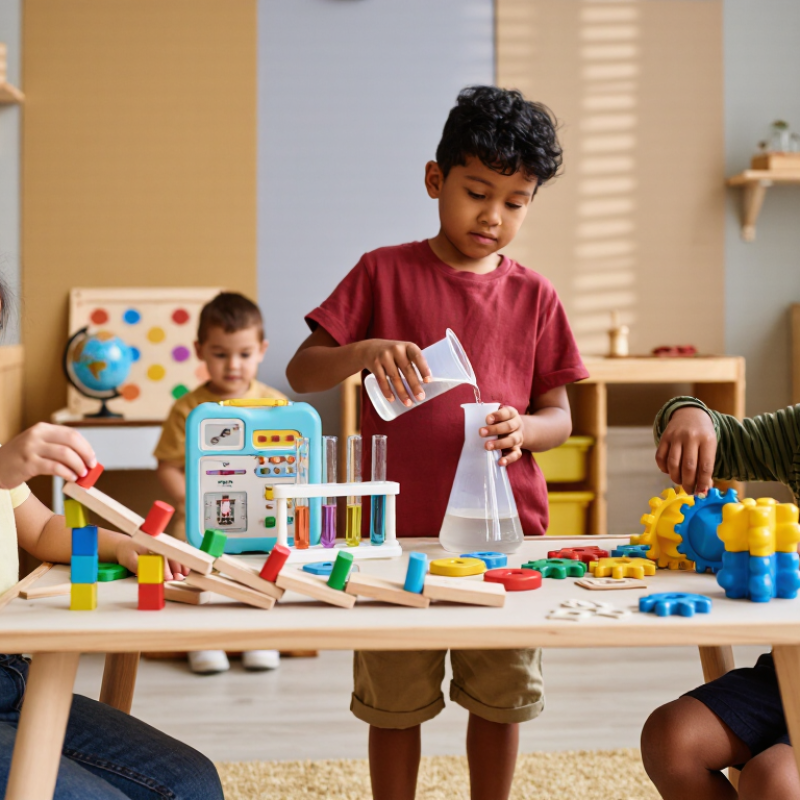
An educational toy invites children to think, try, and adjust—not just press a button and watch. A wooden ramp, for example, lets a child change the angle, roll a marble, and compare what happens. That small experiment practices prediction and cause-and-effect. The LEGO Foundation’s 2018 Learning through Play report describes play as a way to build cognitive, social, emotional, and physical skills. The key is active participation. A toy with many features may still offer little learning if the child only follows fixed instructions.

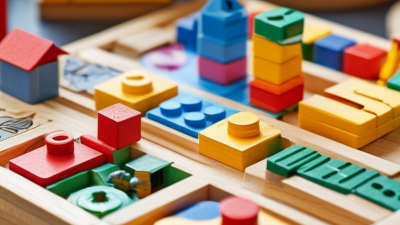
Useful toys also leave room for choice and challenge. Blocks can become a bridge, a tower, or something unexpected. Simple counting pieces can prompt a child to sort by color, then explain the pattern.

The World Economic Forum’s Future of Jobs Report 2025 estimates that 39% of workers’ core skills will change by 2030. That figure is not a measure of toy effectiveness, but it reinforces the value of flexible thinking and problem-solving.

Still, “educational” on the box proves little. Watch what the child actually does: Do they ask questions, test ideas, or invent new rules? Sometimes the best learning starts when the toy is used differently than planned.

How the Top 10 Toys Were Selected

The top 10 were selected using clear criteria, not novelty alone. Each toy was assessed for age fit, safe construction, durability, and the skills children can practice through play. We favored open-ended designs: blocks that invite a bridge, pretend food for a make-believe shop, or puzzles that reward patient trial and error. The American Academy of Pediatrics’ clinical report “The Power of Play” describes play as important for language, social, and self-regulation skills. That evidence informed our criteria, but a toy cannot guarantee a particular learning outcome.

We also considered how easily a child can start playing without constant adult instructions, whether the activity suits different abilities, and whether the price feels reasonable for its likely use. Common Sense Media’s 2020 Common Sense Census reported an average of 2 hours and 24 minutes of daily screen media use among children ages 0–8. We treated that figure as context, not proof that screen-based toys are harmful. A shortlist still involves judgment. Some quieter toys may be overlooked simply because their benefits are less visible in a quick review.

Tips: Check the age guidance and small-part warnings, then watch how your child actually uses the toy. A cardboard ramp and a few blocks can reveal more about their interests than a polished feature list. If play quickly stalls, the toy may not be the right fit.

Top Educational Toys by Age and Learning Goal

For babies and toddlers, sensory blocks invite squeezing, stacking, and naming colors. Stacking cups build early size awareness; children often enjoy knocking them down as much as rebuilding. A shape sorter encourages matching, while chunky puzzles develop hand control and visual reasoning. Keep it simple. Choose pieces sized for the child’s age, and check for loose parts or damage. Short, supervised play sessions are often more useful than a crowded toy shelf.

For preschoolers, counting beads support number sense, and reusable letter tiles encourage sound-and-letter play. A simple science kit can spark careful observing, while a construction set turns plans into sturdy towers—or wobbly ones. That wobble is useful feedback. Cooperative board games help children practice taking turns and handling small disappointments. Pretend-play sets, such as a toy kitchen, build vocabulary and social storytelling. For early school-age children, logic puzzles offer a satisfying challenge without requiring screens. A neat age chart is only a starting point; children develop unevenly, and interests matter. Watch what they return to, then choose toys that stretch one skill without making play feel like a test.

Skills Children Can Develop Through Play

Top 10 Educational Toys for Kids in 2026
Skills Children Can Develop Through Play

Play gives children a practical way to test ideas, make choices, and learn from small mistakes. Building blocks can invite planning: a child stacks a wide base, watches a tower wobble, then adjusts it. Puzzles encourage patience and visual reasoning as little hands turn pieces to find a fit. These skills grow through repetition, not from a toy’s label.

Pretend-play sets, puppets, and simple figures can help children practice language and cooperation. One child might assign roles, negotiate rules, or invent a story about a rainy-day rescue. Board games offer turns, counting, and graceful responses to winning or losing. Not every game ends smoothly. That matters. A brief pause and a calm adult prompt can help a child name frustration and try again.

Magnets, beginner science tools, and art materials encourage curiosity and flexible thinking. Children can sort objects, predict what might stick, or mix colors on scrap paper. Ask, “What do you notice?” rather than rushing to explain. A toy cannot teach alone; adult attention and room for open-ended play make a difference. Some activities may be too easy or too hard, so watch the child’s response and adapt. A slightly messy experiment can still lead to a good question.

Top 10 Educational Toys for Kids in 2026

Skills Children Can Develop Through Play

The chart compares typical opportunities for children to practice STEM thinking, language, creativity, and motor skills through different kinds of play. Ratings are illustrative qualitative estimates on a 1–5 scale, not standardized test results; the experience varies with the toy, child, and way they play.

How to Choose Safe, Age-Appropriate Educational Toys

Choosing an educational toy starts with the child, not the learning label. A puzzle with chunky pieces may suit a preschooler, while a complex construction set can frustrate them—or introduce pieces they might mouth. Check the age guidance, but treat it as a starting point. Small parts matter. The U.S. Consumer Product Safety Commission’s 2023 Toy-Related Deaths and Injuries report estimated 231,700 toy-related emergency-room injuries among children aged 14 and younger. That figure covers many kinds of toys; it is a reminder to inspect, not a reason to fear play.

Look for sturdy pieces, smooth edges, and clear instructions. For younger children, check that parts cannot detach easily, and keep small pieces out of reach. For toys with batteries, make sure the compartment closes securely. Sit nearby during the first play session. A tiny wheel or loose bead can be easy to miss on a busy floor.

Match the toy’s challenge to skills the child is developing: sorting, counting, building, or telling stories. Watch how they use it. If they lose interest or become upset, the toy may be too difficult, even when its age label seems right. I’d rather choose a simple toy that invites repeated play than one promising too many lessons. The label helps, but it cannot know your child.

Top 10 Educational Toys for Kids in 2026 - How to Choose Safe, Age-Appropriate Educational Toys

Rank Toy Type Typical Age Range Learning Benefits Safety and Age-Appropriate Checks Play Idea
1 Building blocks About 1 year and up; choose larger pieces for younger children Encourage spatial reasoning, creativity, problem-solving, and fine-motor skills. For children under 3, avoid pieces small enough to present a choking hazard. Check for cracks, sharp edges, and loose parts. Build a bridge together and test which designs hold a toy safely.
2 Shape sorters and stacking toys About 6 months to 3 years, depending on design Support hand-eye coordination, shape recognition, matching, and early problem-solving. Select large, sturdy pieces without sharp points or detachable small parts. Follow the age label and supervise play. Name each shape and color as the child places it in the matching opening.
3 Chunky puzzles and jigsaw puzzles Chunky puzzles: about 1–3 years; simple jigsaws: preschool age and up Develop visual matching, persistence, spatial awareness, and fine-motor control. Choose pieces sized for the child’s age and ability. Discard damaged pieces with splinters, sharp edges, or loose layers. Start with the border or sort pieces by color before assembling the picture.
4 Pretend-play sets (such as play kitchens or tool sets) About 2 years and up Encourage language, imagination, social interaction, and everyday-life role play. Check that accessories are not choking-sized for young children and that toy tools have no sharp or pointed ends. Take turns being the customer and shopkeeper, practicing simple questions and counting.
5 Art materials (crayons, washable paints, and child-safe scissors) Crayons and paints: toddler age with supervision; scissors: when the child can use them safely Promote creativity, color recognition, hand strength, and early drawing and cutting skills. Choose products labeled for children and use as directed. Supervise use; keep scissors and art materials away from mouths and eyes. Draw a story together, then ask the child to describe the characters and setting.
6 Counting and sorting toys About 2–6 years; use larger objects with younger children Build early number sense, sorting, comparing, pattern recognition, and vocabulary. For children under 3, avoid small counters that could be swallowed. Supervise, and store loose pieces securely. Sort objects by color or size, then count each group together.
7 Board games and matching games About 3 years and up; check the game’s age guidance Practice turn-taking, memory, communication, counting, and following rules. Choose simple rules suited to the child’s attention and language skills. Keep small cards, tokens, or dice away from children who mouth objects. Play a short matching round and encourage players to describe what they remember.
8 Beginner construction and engineering kits About 5 years and up; age varies by parts and instructions Introduce planning, cause and effect, spatial reasoning, and iterative problem-solving. Check minimum-age guidance and piece size. Use only under adult supervision when the kit includes tools, batteries, magnets, or other hazards. Challenge the child to make a stable tower, then change one feature and compare results.
9 Simple science and nature kits About 5 years and up; follow the kit’s age label Encourage observation, asking questions, basic measurement, and understanding of natural processes. Choose activities with clear instructions and age-appropriate materials. An adult should supervise experiments and handle any tools or substances as directed. Grow a suitable seed and let the child record changes with drawings or simple measurements.
10 Beginner coding toys (screen-free or app-supported) About 4 years and up; choose by reading and sequencing ability Introduce sequencing, logic, debugging, and planning step-by-step instructions. Check the recommended age, battery compartment security, and any app’s privacy and screen-use settings. Supervise connected play. Give a toy a sequence of simple directions to reach a target, then revise the steps if it takes the wrong route.

Age ranges are general guides, not developmental guarantees. Always follow the toy’s age label and instructions, inspect toys regularly for damage, and supervise young children—especially around small parts, batteries, magnets, cords, and tools.