What Are the Top Building Block Types in 2026?

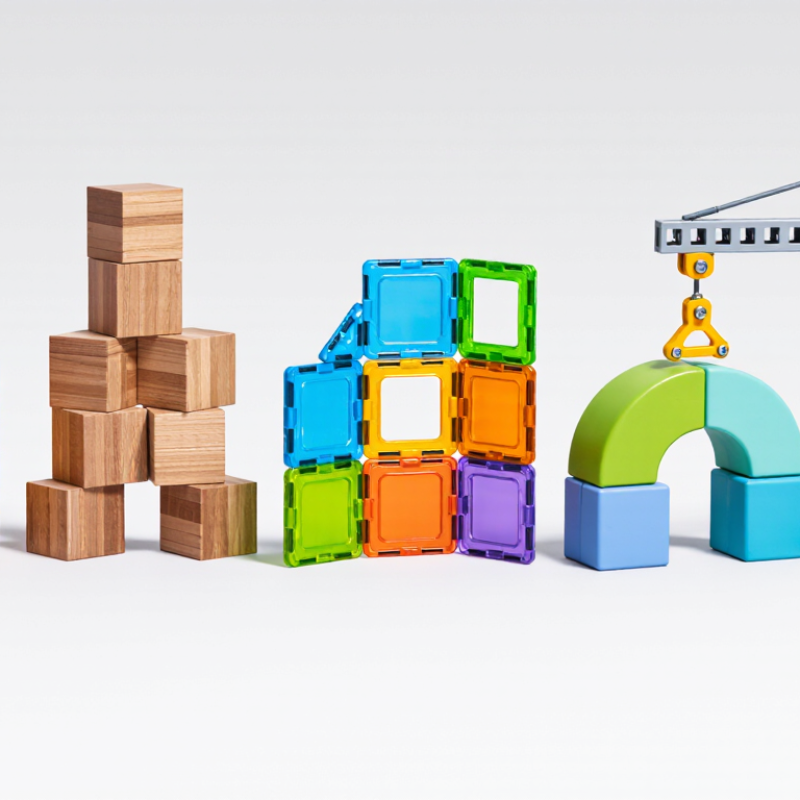
In 2026, the best building blocks are not defined by one material or a single trend. Families often compare classic interlocking bricks, wooden cubes, magnetic tiles, large toddler blocks, and construction sets with simple mechanical parts. Each type offers a different kind of play. A child might build a sturdy garage from chunky bricks, then use wooden blocks to make a wobbly tower. That wobble matters; it invites another try.

This guide looks at the leading Building Block types through practical criteria: age suitability, durability, creative range, storage, and value. Magnetic tiles can make bright, see-through walls, while traditional bricks support detailed builds and easy rebuilding. Wooden sets feel substantial in small hands, but their shapes may offer fewer connection options. For younger children, larger pieces can be easier to grip; always check the maker’s age guidance and product details. Nice in theory. Less clear in practice.

Popularity can change with new sets, prices, and family preferences, so a fixed “top” ranking deserves caution. A useful choice depends on the child, available space, and whether adults want open-ended play or guided projects. Look closely at the connections, piece size, and how easily the set packs away. I would not call one type best for every home. The right set is the one that gets used, rebuilt, and enjoyed long after the first neat box is opened.
What Are the Top Building Block Types in 2026?

Classic Interlocking Bricks for Versatile Construction

Classic interlocking bricks remain useful because their simple connections support many kinds of construction. A low wall, a compact bridge, or a detailed roof can all begin with the same basic pieces. Their regular shape makes planning easier, especially when a model needs repeated patterns or balanced proportions.

The connection matters. Press each brick down evenly, and check that the layers overlap rather than forming one long seam. This helps a structure stay steady during handling. For a tall tower, a wider base and staggered joints usually make a noticeable difference. Small plates can create steps, window ledges, or shallow curves. A firm tabletop also helps; uneven surfaces can quietly throw off an otherwise careful build.

There are limits. Interlocking bricks are less suited to smooth, flowing surfaces, and large builds may need extra support. I sometimes find that a design looks sturdy but feels loose when lifted. That is worth reconsidering. A few test sections can reveal weak joints before the full structure takes shape. Even simple pieces reward patience. A crooked layer can change the whole silhouette.

What Are the Top Building Block Types in 2026? - Classic Interlocking Bricks for Versatile Construction

Building Block Type Typical Form Common Uses Main Advantage Planning Consideration
Classic Interlocking Bricks Rectangular bricks with studs on top and matching tubes or cavities underneath Everyday models, walls, vehicles, houses, and general-purpose construction Connect in multiple directions and are easy to combine across many designs Small pieces may be unsuitable for very young children; check the age guidance on the set
Large-Format Bricks Oversized interlocking pieces with broad surfaces Early building activities, simple structures, and large-scale play Easy to grip and assemble, with fewer pieces needed for a basic structure Large pieces offer less detail and may not connect with every standard-size system
Plates and Thin Bricks Flat, shallow pieces in rectangular or square shapes Floors, roofs, platforms, roads, and layered surfaces Create broad, low-profile areas and help add structure between building layers Thin pieces can flex more than full-height bricks, depending on their size and design
Slope and Curved Bricks Angled, rounded, or tapered pieces Vehicle bodies, roofs, arches, hills, and decorative contours Make smooth transitions and shaped surfaces that rectangular bricks cannot create alone Specialized shapes may offer fewer connection points than standard bricks
Transparent Bricks Clear or translucent pieces in brick, plate, or tile forms Windows, lights, water effects, display models, and colored accents Allow light through and add visual depth to a model Scratches, dust, and fingerprints can be more visible on clear surfaces
Technic-Style Beams and Connectors Beams with holes, pins, axles, gears, and other mechanical connectors Moving assemblies, frames, steering systems, and simple machines Support mechanical connections and functional movement Assembly may require more careful alignment and an understanding of how parts interact
Tiles and Smooth-Surface Pieces Flat pieces with a smooth upper face Pavements, tabletops, floors, signs, and finished exterior surfaces Give models a clean, continuous finish without exposed studs on top Usually provide fewer direct top-side connections than studded pieces
Hinged and Articulated Pieces Pieces joined by hinges, swivels, or flexible connectors Doors, ramps, wings, movable panels, and poseable models Enable controlled movement and adjustable angles Moving joints can loosen with repeated use and may limit the weight they can support

The best type depends on the project: classic interlocking bricks suit general construction, while specialized shapes and connectors add surface detail, curves, or movement.


Large Building Blocks for Early Childhood Play

What Are the Top Building Block Types in 2026?

Large building blocks support early childhood play through movement, teamwork, and hands-on problem solving. Children can stack them into towers, line them up as pretend roads, or build a small reading nook. The scale matters: oversized pieces are easier for little hands to grasp and move. They also invite full-body play. That can be joyful, and a bit noisy.

Foam blocks are soft and light, making them useful for indoor building and gentle tumbling. Hollow plastic blocks are usually easy to wipe clean and can work well outdoors, though they may slide on smooth floors. Large cardboard blocks are lightweight and simple to rearrange, but can wear down if they get wet or are repeatedly crushed. Wooden blocks feel sturdy, yet they are heavier; choose sizes that children can manage safely. No single type suits every room or age group. Check for damaged edges, stable stacking, and pieces too small for the children using them.

Tips: Start with a low stack on a clear, level surface. Offer a few shapes, then let children decide what to build. Keep heavy pieces near the floor, and supervise active play. If a tower keeps falling, pause and ask what might make its base stronger. That small rethink is part of the play.

What Are the Top Building Block Types in 2026?

Representative sizes of modular wooden unit blocks used in early childhood play. The chart compares block forms by longest side; it is not a sales or popularity ranking.

The traditional unit-block convention uses a unit block measuring 5.5 × 2.75 × 1.375 inches. The other lengths shown are modular multiples of its 5.5-inch side. Actual dimensions vary by set and manufacturer.

Wooden and Foam Blocks for Open-Ended Building

What Are the Top Building Block Types in 2026?

Wooden and Foam Blocks for Open-Ended Building

Wooden and foam blocks remain useful choices for open-ended building in 2026. Their simple shapes invite children to invent towers, roads, tunnels, and pretend homes. Wooden blocks feel steady in small hands and can support sturdy structures on a flat floor. Foam blocks are lighter, quieter, and easier to move around a playroom. They may suit younger builders who are still learning to stack and balance. Neither material guarantees hours of play, though; a familiar set can lose its appeal without room for new ideas.

Tips: Match block size to the child’s age and follow the maker’s safety guidance. Check wooden pieces for splinters and foam pieces for tears before play. A low basket makes cleanup easier.

For a flexible set, look for varied shapes rather than a large number of identical cubes. A few arches, planks, and cylinders can turn a basic stack into a bridge or pretend shop. Wooden blocks usually suit firm surfaces, while foam pieces work well on rugs where structures may wobble. Mixing materials can add contrast, but it may also make builds less stable. Keep the play area clear, and let children test their own designs—even when a tower falls sooner than expected.

Magnetic Tiles and Connectors for 3D Structures

Magnetic tiles and connectors are among the most useful building block types for creating three-dimensional structures. Flat squares form walls quickly, while triangles can help brace roofs and angled sides. Connectors add another kind of flexibility: they can join pieces at corners or extend a frame beyond a single flat face.

Snap, lift, adjust.

A small change in angle can turn a simple box into a tower, bridge, or branching sculpture.

For steadier builds, start with a wide base and add height gradually. Press each joint gently, then check whether the structure leans before adding more pieces. In practice, connectors may make unusual shapes possible, but they do not automatically make a structure stronger.

Magnetic strength and connector fit vary across sets, so pieces should not be assumed to work together. One limitation is easy to overlook: a tall, narrow tower can look stable until a light bump sends it down. That is part of the learning, though not always the fun part. Choose pieces suited to the builder’s age, follow the set’s safety guidance, and inspect them for cracks or loose components.

STEM Building Sets for Engineering and Robotics Projects

What Are the Top Building Block Types in 2026?
STEM Building Sets for Engineering and Robotics Projects

For engineering and robotics projects, the most useful building blocks do more than stack. Structural beams and connectors help learners build frames, bridges, and adjustable chassis. Gears, axles, and wheels introduce motion and mechanical advantage. Robotics-focused sets add motors, sensors, and programmable controllers. The International Federation of Robotics reported 4.28 million industrial robots in operation worldwide in 2023, up 10% from the previous year. That growth makes hands-on practice with movement, sensing, and control especially relevant.

A well-chosen set should let a learner test an idea, spot a failure, and rebuild without starting over. For example, a small wheeled rover can reveal why a loose axle causes wobble or why a sensor needs a clear view. The World Economic Forum’s Future of Jobs Report 2025 says 39% of workers’ core skills are expected to change by 2030. Technical literacy matters. Still, more parts do not always mean better learning; I’ve seen simple builds invite more thoughtful redesign than crowded kits.

Tips: Start with one goal, such as crossing a gap or following a dark line. Build a sturdy frame before adding motors. Change one variable at a time, and record what happens. A quick sketch helps. Leave room for imperfect prototypes; a crooked first version can expose the most useful problem.