Why Choose Magnetic Toys for Creative Learning Solutions?
Magnetic toys have gained significant attention in the realm of creative learning solutions. In 2020, the global educational toys market was valued at over $18 billion, with magnetic toys accounting for a substantial portion of that growth. These toys not only offer fun but also promote critical thinking and problem-solving skills in children.
Children are naturally curious. Magnetic toys foster this curiosity by allowing hands-on exploration. They engage kids in imaginative play while developing fine motor skills. Research indicates that children learn better through play. Magnetic toys provide an interactive experience that traditional toys cannot replicate. This interaction encourages cognitive development in young minds.
However, not all magnetic toys are created equal. Some designs may pose safety concerns due to small parts. It’s vital for parents to choose products that meet safety standards. The right magnetic toys can enhance learning outcomes. Yet, reflection on quality and efficacy is crucial. Ultimately, when chosen wisely, magnetic toys can serve as a valuable tool for creative learning.

The Concept of Magnetic Toys in Learning Environments
Magnetic toys offer a unique dimension to learning environments. They engage children's curiosity and creativity. As children manipulate magnetic pieces, they explore basic physics. This hands-on experience fosters problem-solving skills that are essential for their development.
In classrooms, these toys enhance collaborative learning. Children can work together on building projects, encouraging teamwork. They share ideas while experimenting with different magnetic configurations. This interaction cultivates communication skills. However, it also raises challenges; not all children may contribute equally. Teachers must guide discussions to ensure every voice is heard.
While magnetic toys are beneficial, they require careful supervision. Children may become frustrated or distracted if pieces fail to connect as expected. It's crucial for educators to facilitate positive experiences. This can help children learn resilience and patience. Ultimately, magnetic toys serve as a powerful tool in early education, inviting creativity and innovation while also presenting opportunities for growth.
Understanding the Impact of Magnetic Toys on Learning
Benefits of Magnetic Toys for Cognitive Development
Magnetic toys are increasingly recognized for their role in cognitive development. Studies show that hands-on learning with these toys enhances problem-solving skills. According to a report from the National Association for the Education of Young Children (NAEYC), engaging with manipulatives improves critical thinking by 40%. Children explore shapes and structures, which fosters creativity.
The benefits extend beyond basic skills. Magnetic toys promote spatial reasoning, crucial for STEM learning. Data indicates that children who regularly play with magnetic sets perform better in math and science assessments. This type of play encourages experimentation. Kids make mistakes and rebuild, learning resilience and adaptability.
Tips: Encourage open-ended play by providing various magnetic pieces. Allow children to create without restrictions. This fosters independent thinking and boosts confidence. Consider setting challenges to solve together. It fosters teamwork and enhances communication skills. Embrace the process, as learning comes from exploration, not just success.
Enhancing Creativity and Imagination with Magnetic Toys
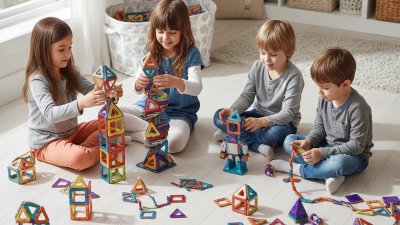
Magnetic toys have gained popularity as powerful tools for enhancing creativity and imagination. They offer unique opportunities for children to engage in hands-on learning. With colorful magnetic pieces, kids can build structures in various shapes and sizes. This interactive play fosters exploration and experimentation. Each session with these toys can ignite new ideas and concepts.
As children manipulate the magnetic parts, they develop spatial awareness and problem-solving skills. This playful approach allows for learning through trial and error, a critical component of creativity. It's essential to observe how kids approach challenges with these toys. They might struggle with balancing pieces or aligning them perfectly. This process of figuring things out provides valuable lessons.
Parents and educators can benefit from understanding the role of magnetic toys in a child's development. They are not just toys; they are tools for building imagination. Each creation tells a story. Kids learn the importance of patience and perseverance as they attempt new designs. Reflecting on their experiences with magnetic toys can lead to deeper insights into their own creative potential.
Applications of Magnetic Toys in Educational Settings
Magnetic toys have gained popularity in educational settings due to their unique benefits. These toys encourage hands-on learning experiences. They stimulate creativity and critical thinking in students of all ages. Many classrooms are now incorporating magnetic building sets into their curricula. These tools enhance spatial awareness and problem-solving skills.
Here are some tips for teachers considering magnetic toys: start small. Choose a few sets that align with your lesson plans. Observe how students interact with them. Adjust your approach based on their engagement levels. Encourage open-ended play. This allows children to explore and invent freely.
Magnetic toys are not only engaging; they also promote collaboration. When students work together with these toys, they learn to communicate effectively. They share ideas and build on each other’s concepts. However, it's important to recognize potential distractions. Some students may find it hard to focus. Regularly check in with them to keep the learning process on track. This balance can create a productive learning environment.
Choosing the Right Magnetic Toys for Different Age Groups
When selecting magnetic toys, age is a crucial factor. Different age groups benefit from specific features. Young children, around two to three years old, need larger pieces. These magnets should be strong enough to prevent choking hazards. Simple shapes, like blocks or animals, can foster early creative thinking. The focus should be on bright colors to enhance visual learning.
For slightly older kids, around four to six years old, the toys can become more complex. Intricate shapes, such as geometric forms, promote advanced building skills. At this stage, children start understanding spatial relationships. Offering sets with various sizes can stimulate imaginative play. An emphasis on open-ended designs encourages children to explore freely and think critically.
Older children, around seven years and up, benefit from multi-functional magnetic sets. These are perfect for absorbing more complex concepts like physics and engineering. Combining magnets with other materials can lead to rich, creative projects. It’s essential to present challenges that push their boundaries. Yet, some children might struggle to stay engaged. Reflecting on individual interests and skills can help tailor the magnetic toy experience effectively.
Why Choose Magnetic Toys for Creative Learning Solutions? - Choosing the Right Magnetic Toys for Different Age Groups
| Age Group |
Recommended Magnetic Toys |
Benefits |
Key Features |
| 0-2 Years |
Magnetic Blocks |
Enhances motor skills and sensory development |
Soft edges, colorful, easy to grip |
| 3-5 Years |
Magnetic Building Tiles |
Promotes creativity and spatial awareness |
Various shapes, strong magnets, vibrant colors |
| 6-8 Years |
Magnetic Construction Sets |
Fosters problem-solving and critical thinking |
Interlocking pieces, complex design possibilities |
| 9+ Years |
Magnetic Science Kits |
Develops interest in science and engineering |
Hands-on experiments, detailed instructions, educational focus |