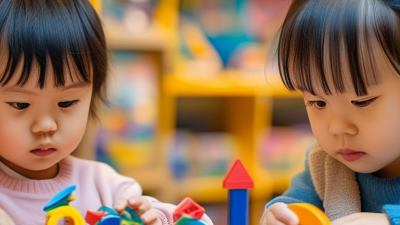
Finding the best Children Toys manufacturers in China takes more than comparing colorful catalogs and low unit prices. Wholesale buyers need products that support meaningful play, consistent production, and documentation matching their destination market. Child-development and play advocate Fred Rogers said, “Play gives children a chance to practice what they are learning.” His observation offers a useful purchasing lens: consider how children will actually use each product. A wooden puzzle needs smooth edges, secure pieces, and an age recommendation supported by appropriate safety assessments. Details matter.
China’s toy manufacturing landscape includes production centers such as Chenghai in Shantou, alongside suppliers across Guangdong and Zhejiang. Buyers can source building sets, plush animals, educational games, and outdoor toys through factories with different specialties. However, a polished showroom does not establish manufacturing capability or reliable quality control. Ask which facility makes your order, whether subcontractors are involved, and how finished batches are inspected. Request product-specific test reports relevant to your market, such as applicable ASTM F963 requirements or EN 71 standards. Check their scope. A report for one model does not automatically cover another material, color formulation, or product design.
This guide examines the practical criteria behind a dependable wholesale partnership: product specialization, order quantities, sample quality, lead times, and traceability. Price still matters, especially when packaging, freight, testing, and defective units affect your actual landed cost. Yet the cheapest quotation may become expensive after preventable rework. Samples also have limits; an excellent prototype cannot guarantee every production run. Choosing well means checking evidence, documenting specifications, and revisiting assumptions as your Children Toys business grows.
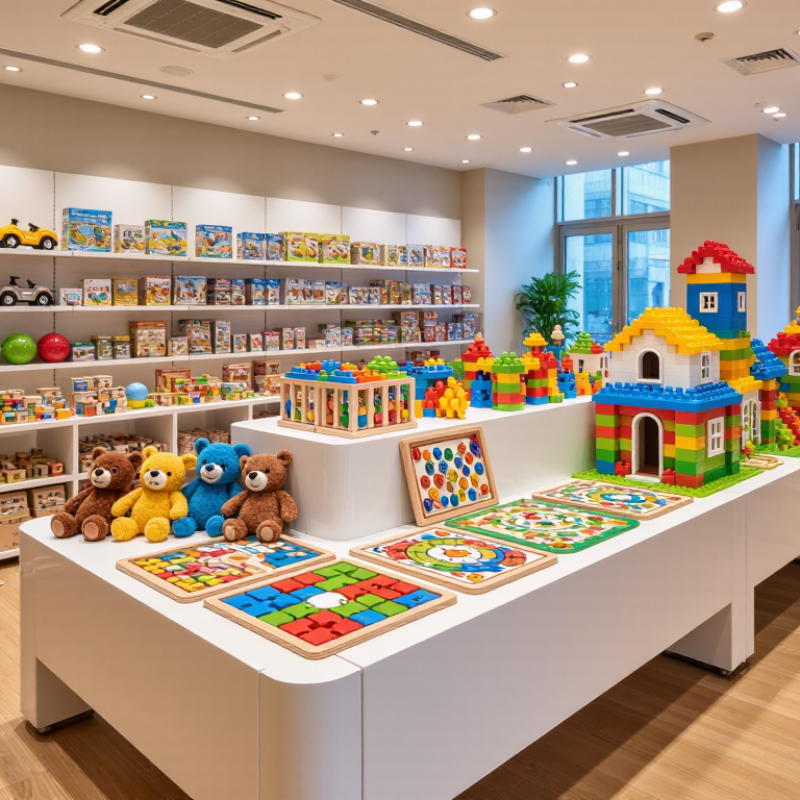
China’s children’s toy industry combines extensive production capacity with specialized regional supply chains. The China Toy and Juvenile Products Association’s 2024 industry report draws on Chinese customs statistics. It records approximately US$40.57 billion in toy exports during 2023, down 12.2% from 2022. Scale needs context. Export value alone cannot establish a factory’s quality, production capacity, or suitability for wholesale orders.
Manufacturing clusters help buyers narrow their supplier searches. Chenghai, in Guangdong, has established supply chains for plastic and electronic toys. Zhejiang offers wooden toy manufacturing, particularly around Yunhe. These concentrations can simplify sourcing for molded components, printed packaging, and assembly services. However, a supplier’s address does not prove manufacturing capability. Buyers should verify equipment, production records, and whether subcontractors handle painting or assembly. Check the details.
Wholesale purchasing also requires product-specific compliance checks. For EU-bound toys, relevant EN 71 testing should match the intended age group and materials. US-bound products may require applicable ASTM F963 testing and a Children’s Product Certificate. Request reports identifying the actual model, laboratory, and tested materials. A polished sample can still hide inconsistent paint coverage or loose wheel fittings in later batches. Sample approval is useful, but imperfect. Written specifications, retained samples, and pre-shipment inspections give buyers clearer evidence of production consistency.
| Manufacturing Cluster | Established Product Categories | Common Materials and Components | Wholesale Sourcing Relevance | Key Checks Before Ordering |
|---|---|---|---|---|
| Chenghai, Shantou Guangdong Province | Plastic toys, remote-controlled toys, toy vehicles, construction toys, and battery-operated toys. | ABS and polypropylene plastics, molded components, small motors, printed circuit boards, and metal fasteners. | An established toy manufacturing cluster with a concentration of plastic molding, toy assembly, and supporting suppliers. | Check small parts, accessible edges, battery compartments, plastic material specifications, and radio compliance where wireless functions are included. |
| Dongguan Guangdong Province | Plastic figures, dolls, plush toys, and electronic toys. | Injection-molded plastics, vinyl, textiles, synthetic filling, electronic modules, and surface coatings. | Part of the Pearl River Delta manufacturing network, with access to tooling, molding, assembly, and export supply chains. | Confirm tooling ownership, approved materials, coating specifications, assembly consistency, and permission to use licensed characters or artwork. |
| Shenzhen Guangdong Province | Electronic learning toys, programmable toys, toy robots, and connected play products. | Printed circuit boards, sensors, speakers, motors, plastic enclosures, batteries, and wireless modules. | A major electronics development and manufacturing hub relevant to toys that combine hardware, software, and electronic functions. | Evaluate electrical safety, battery protection, firmware reliability, and applicable radio requirements. Review privacy obligations for products that collect personal data. |
| Yunhe, Lishui Zhejiang Province | Wooden blocks, wooden puzzles, shape sorters, pull-along toys, and wooden educational toys. | Solid wood, plywood, wooden dowels, adhesives, paints, and protective finishes. | A recognized wooden toy production cluster with suppliers specializing in wood processing and educational play products. | Inspect splinters, edges, detachable components, adhesive performance, and coating chemistry. Verify wood sourcing documentation when required by the buyer or destination market. |
| Yangzhou Jiangsu Province | Stuffed animals, plush dolls, and other soft-filled toys. | Polyester plush fabrics, synthetic fiber filling, sewing thread, embroidery, and attached accessories. | An established plush toy manufacturing cluster suited to sewn products and customized soft toy designs. | Check seam strength, filling cleanliness, flammability, accessory attachment strength, and age-appropriate design, particularly for toys intended for children under three. |
| Yiwu Zhejiang Province | Small plastic toys, novelty toys, simple puzzles, and seasonal toy assortments. | Product-dependent combinations of plastics, textiles, paperboard, and small metal components. | A major wholesale distribution center offering access to products from multiple manufacturing regions. A seller may be a trader rather than the original factory. | Identify the actual manufacturer, verify product traceability, confirm assortment contents, and ensure test reports match each purchased model and material specification. |
How to interpret this overview: The categories describe established regional industry activity, not exclusive specializations or a ranking of supplier quality. Materials vary by product. Minimum order quantities, prices, production capacity, and lead times require supplier-specific quotations.
United States: Toys must meet applicable federal requirements, including the mandatory toy safety standard incorporating ASTM F963. Children's toys generally require testing by a CPSC-accepted third-party laboratory and a Children's Product Certificate, subject to applicable rules and exceptions. Lead, phthalate, small-parts, and tracking-label requirements may also apply.
European Union: Toys require CE marking and compliance with applicable EU toy safety legislation. Relevant harmonized EN 71 standards address hazards such as mechanical risks, flammability, and migration of certain elements; EN IEC 62115 addresses electrical toy safety. The manufacturer must complete the applicable conformity assessment and maintain technical documentation and an EU declaration of conformity.
Compliance references: U.S. Consumer Product Safety Commission: Toy Safety; European Commission: Toy Safety. Requirements depend on the product, intended age group, destination market, and legislation applicable when the product is placed on the market.

+86-754-86986185

David: info@yo-yo.net.cn
Susan: sales8@yo-yo.net.cn
Eunice: sales3@yo-yo.net.cn
Vincent: st88@sixtrees.cn

David: +86 13118683999
Susan: +86 13829657827
Eunice: +86 13809675407
Vincent: +86 13592830482