Why Are Magnetic Toys So Popular Worldwide?

Why Are Magnetic Toys So Popular Worldwide?

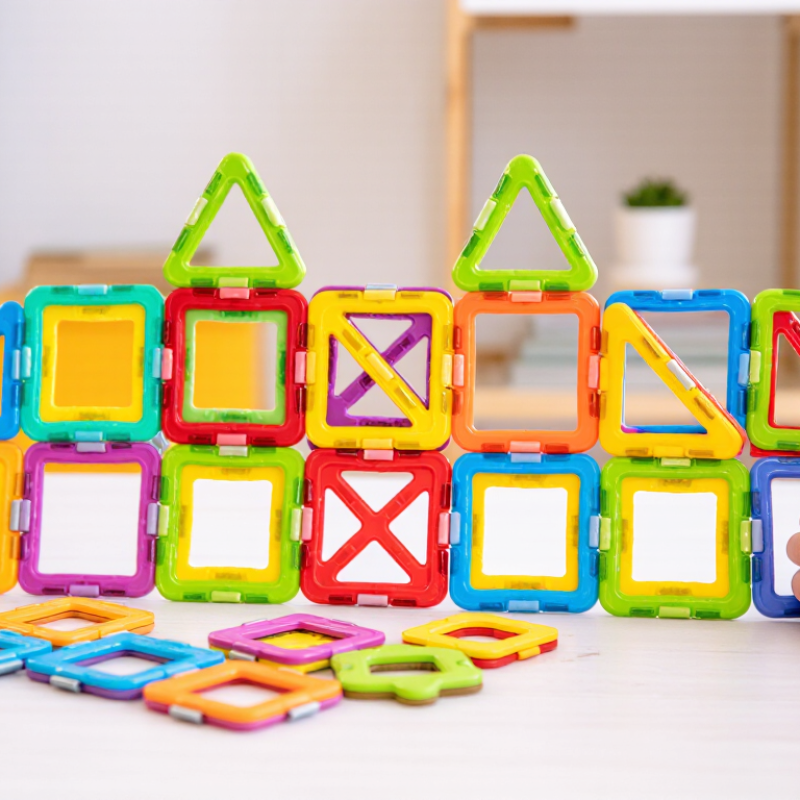
Magnetic Toys have moved from classroom shelves into homes, museums, and online gift guides. Their appeal is easy to see. A child connects two colorful pieces, hears a soft click, and watches a bridge take shape. That instant feedback makes abstract ideas feel physical. It also invites repeated experiments. A tower falls. Another design appears.

Joan Almon, a respected early-childhood educator, once said, “The best toys are 10 percent toy and 90 percent child.” Magnetic Toys reflect that idea unusually well. The pieces offer structure, but children supply the story, challenge, and solution. Parents often value this balance because one set can support counting, pattern-making, engineering practice, and cooperative play. Adults may see simple shapes. Children see possibilities.

Their worldwide popularity also comes from portability and visual clarity. A small box can create roads, animals, buildings, or geometric forms across different languages and cultures. No translation is required. Still, popularity should not become careless enthusiasm. Some magnetic components can create serious health risks if swallowed, especially by young children. Responsible manufacturers provide clear age guidance, durable construction, testing information, and warnings. Families should inspect pieces for cracks and follow local safety advice.

The story is not perfectly simple. Magnetic Toys can encourage creativity, yet they may also frustrate children when designs collapse. That frustration can be useful, but only with patient guidance. Their strongest value may not be entertainment alone. It lies in turning curiosity into visible action, while reminding adults that imaginative play still needs informed supervision.
Why Are Magnetic Toys So Popular Worldwide?

What Magnetic Toys Are and How They Work

Why Are Magnetic Toys So Popular Worldwide?

What Magnetic Toys Are and How They Work

Magnetic toys use pieces containing small permanent magnets. These magnets create an invisible magnetic field around them. Each magnet has a north pole and a south pole. Opposite poles attract, while matching poles push apart. The force can act through thin plastic, wood, or paper. It does not need batteries.

A simple test makes the idea clear. Bring two pieces together slowly. They may snap into place, twist, or slide away. The movement depends on pole direction, magnet strength, distance, and the shape of each piece. Friction also matters. A smooth connector turns easily, while a rough surface holds a structure firmly.

Children can build bridges, animals, towers, and moving patterns with these parts. The activity develops spatial reasoning through direct touch. It also introduces balance, symmetry, and basic engineering decisions. No shared language is required. That may help explain the toys’ worldwide appeal.

Still, magnetic play is not automatically safe. Loose, powerful magnets can cause serious internal injury if swallowed. Adults should inspect damaged pieces and keep small magnets away from young children and pets. Magnets should also stay away from some medical devices. The science looks simple, but safe design requires careful judgment. I sometimes find the most useful lesson is this: a structure can look stable and still fail without warning.


The History and Global Development of Magnetic Toys

Why Are Magnetic Toys So Popular Worldwide?
The History and Global Development of Magnetic Toys

Magnetic toys became popular because they turn an invisible force into something children can hold, move, and test. Their history reaches back to early scientific demonstrations, when magnets explained attraction, direction, and electricity. By the nineteenth century, simple magnetic games appeared in classrooms, homes, and public demonstrations. Surviving school catalogs and museum collections support this development. Later, improved manufacturing made small magnets cheaper and easier to place inside wooden, plastic, or metal pieces. That change widened access. Adults valued the learning potential, while children noticed the satisfying click when two pieces joined. Both reasons mattered.

Global development followed different paths. In Europe and North America, magnetic sets often supported geometry, construction, and early science lessons. In East Asia, careful design and compact packaging helped these toys fit crowded homes and classrooms. Online trade later connected makers, teachers, and families across continents, speeding up new shapes and play ideas. Today, magnetic tiles, puzzles, rods, and animal models appear in many educational settings. The strongest examples encourage open-ended building rather than one correct result. Still, the story deserves caution. Marketing sometimes promises more learning than a toy can deliver, and historical accounts can overlook local makers. Safety guidance also matters, especially with loose small magnets and young children. Popularity is real, but it is not proof of educational quality.

Why Magnetic Toys Attract Children and Adults

Why Are Magnetic Toys So Popular Worldwide?

Magnetic toys attract children because they offer an immediate physical response. A piece moves, clicks, and stays connected. That small success feels surprisingly rewarding. Children can build towers, animals, bridges, or shapes without following one fixed answer. The toy becomes a quiet problem-solving partner. I have noticed that open-ended play often keeps children engaged longer than toys with one final result. Still, not every child enjoys the same challenge.

Magnetic toys also attract adults for different reasons. They make abstract ideas feel visible and touchable. A parent can explain balance, attraction, structure, and symmetry during ordinary play. An adult may also enjoy designing a stable form after a tiring day. The repeated joining and separating can feel calming. It is simple. Yet the claim that magnetic play always improves intelligence would be too strong. Evidence should be discussed carefully, because enjoyment does not automatically prove long-term learning.

Their worldwide popularity may come from this shared language of movement and construction. A child does not need advanced reading skills to begin experimenting. Families can play together across age groups and cultures. Safety still matters. Adults should check age guidance, inspect damaged pieces, and keep small magnetic parts away from young children. Strong magnets can cause serious harm if swallowed. A safer experience depends on supervision, suitable design, and honest expectations. The best play may include mistakes, collapsed towers, and designs that need rebuilding.

Why Are Magnetic Toys So Popular Worldwide? - Why Magnetic Toys Attract Children and Adults
Evidence-based overview of the main attraction factors, learning value, and safety considerations
Attraction Dimension Relevant Data or Established Fact Why It Appeals to Children Why It Appeals to Adults Evidence Type
Visible magnetic force Earth’s magnetic field is approximately 25–65 microteslas, while a toy magnet can create a much stronger local attraction that is easy to feel and observe. The push-and-pull effect creates immediate surprise, feedback, and cause-and-effect learning. The invisible force provides a satisfying physical demonstration of science in everyday life. Measured physical property; Earth-field range reported by geophysical agencies.
Open-ended construction Magnetic pieces can connect at multiple angles, allowing structures such as towers, geometric figures, bridges, and patterns. There is no single correct result, encouraging imagination, experimentation, and repeated rebuilding. Adults can use the same type of play for design exploration, model making, and creative relaxation. Mechanical design characteristic of magnetic construction systems.
STEM learning value Magnetic play can demonstrate polarity, attraction, repulsion, balance, symmetry, geometry, and structural stability. Children learn through hands-on trial and error instead of relying only on verbal explanations. The activity connects physics and engineering ideas with practical problem-solving. Established concepts in elementary physics, geometry, and engineering education.
Fast feedback cycle Magnetic connections are usually reversible: pieces can attach, separate, rotate, and reconnect within seconds. Quick results help maintain attention and make experimentation feel rewarding. Short, repeatable interactions suit desk play, breaks, and informal creative activities. Direct usability characteristic; not a universal consumer survey statistic.
Tactile and fine-motor activity Building requires grasping, aligning, rotating, separating, and positioning small or medium-sized pieces. These actions can support hand-eye coordination and controlled hand movements when the product is age-appropriate. The physical sensation offers an alternative to purely screen-based entertainment. General child-development principle; benefits vary by design, age, and play context.
Social play and communication Magnetic construction can be performed individually, collaboratively, or as a guided classroom activity. Children can share pieces, compare designs, negotiate plans, and explain how a structure works. Families, teachers, and children can participate in the same activity across age groups. Common educational and play pattern; outcomes depend on adult guidance and group setting.
Cross-cultural simplicity The basic actions—connect, separate, build, balance, and rebuild—require little language and can be understood through demonstration. Children can begin exploring before they fully understand technical vocabulary. The intuitive interaction supports casual play in homes, schools, offices, and museums. Interaction design characteristic; global popularity is influenced by culture, price, access, and education systems.
Reusability and low material waste during play The same pieces can be repeatedly disassembled and recombined into different designs without consumable parts. Repeated rebuilding extends the number of possible play sessions and challenges. Adults may value compact storage and the ability to create multiple models from one set. Product-use characteristic; durability and environmental impact depend on materials and manufacturing.
Safety awareness Swallowing two or more high-powered magnets can cause them to attract through intestinal walls, creating a risk of perforation or blockage. Age labeling, supervision, and secure magnet encapsulation are essential, especially for young children. Responsible users should keep loose high-powered magnets away from children and seek urgent medical advice after suspected ingestion. Medical and consumer-product safety guidance.
Safety note: Magnetic toys should be selected according to the manufacturer’s age guidance. Loose, small, or high-powered magnets should never be accessible to young children, and suspected magnet ingestion requires immediate medical attention.
Reference basis: Earth magnetic-field ranges are consistent with public geophysical data from the National Oceanic and Atmospheric Administration. Magnet-ingestion risks are documented in consumer-product safety and pediatric medical guidance. Educational and developmental benefits depend on age, supervision, product design, and the way the toy is used.

Educational, Creative, and Developmental Benefits

Why Are Magnetic Toys So Popular Worldwide?

Educational, Creative, and Developmental Benefits

Magnetic toys turn abstract ideas into something children can touch, move, and rebuild. A child may connect pieces into a bridge, then test whether it holds a small wooden car. This simple experiment introduces balance, force, symmetry, and early engineering thinking. Educational specialists often value open-ended materials because they encourage questions instead of fixed answers. Children learn through repeated attempts, including failed designs.

These toys also support creativity without requiring advanced drawing or writing skills. A child can build a house, animal, maze, or imaginary spacecraft within minutes. The design can change whenever a new idea appears. This freedom strengthens spatial awareness and flexible problem-solving. It may also support language development when children explain their structures to parents or classmates. Small hands gain practice with grasping, joining, separating, and rotating pieces.

The developmental effect is not automatic. Some children lose interest when an adult controls every step. Others need a clear challenge, such as building a tower taller than a book. I have seen classroom activities become more engaging when children work in pairs and discuss why structures collapse. That social exchange matters. Still, careful supervision is essential, especially for younger children, because loose magnetic parts can create serious health risks if swallowed. Age labels, secure construction, and regular piece inspections should guide play. A few minutes of quiet experimentation can reveal more than a perfect model.

Safety Concerns and Responsible Use Worldwide

Magnetic toys fascinate children because invisible forces create movement, puzzles, and satisfying clicks. The same attraction creates serious risks when small, high-powered magnets are swallowed. According to the U.S. Consumer Product Safety Commission, an estimated 2,400 magnet-ingestion injuries reached hospital emergency departments from 2017 to 2021. Multiple magnets can attract through intestinal walls, causing perforation, blockage, infection, or surgery. Children may show few symptoms at first. That delay matters.

Responsible use begins with age guidance, adult supervision, and careful storage. Safety rules differ across markets, so caregivers should check local compliance labels, test reports, and instructions. Do not rely on a warning sticker alone. Inspect every piece for cracks, loose parts, or damaged coatings. Keep magnetic pieces away from toddlers, pets, and food areas. The European Commission’s 2023 Safety Gate report recorded 3,412 product alerts, with toys among the most-notified categories. This wider surveillance shows why product checks matter worldwide. An uncomfortable gap remains: household storage is often overlooked.

Tips:

Count every piece before and after play. Store magnets in a locked container. Never allow mouth play. Replace damaged pieces immediately. If swallowing is possible, seek urgent medical care, even without pain. Do not induce vomiting. A safe routine may feel strict, but one missed magnet can change the situation quickly.