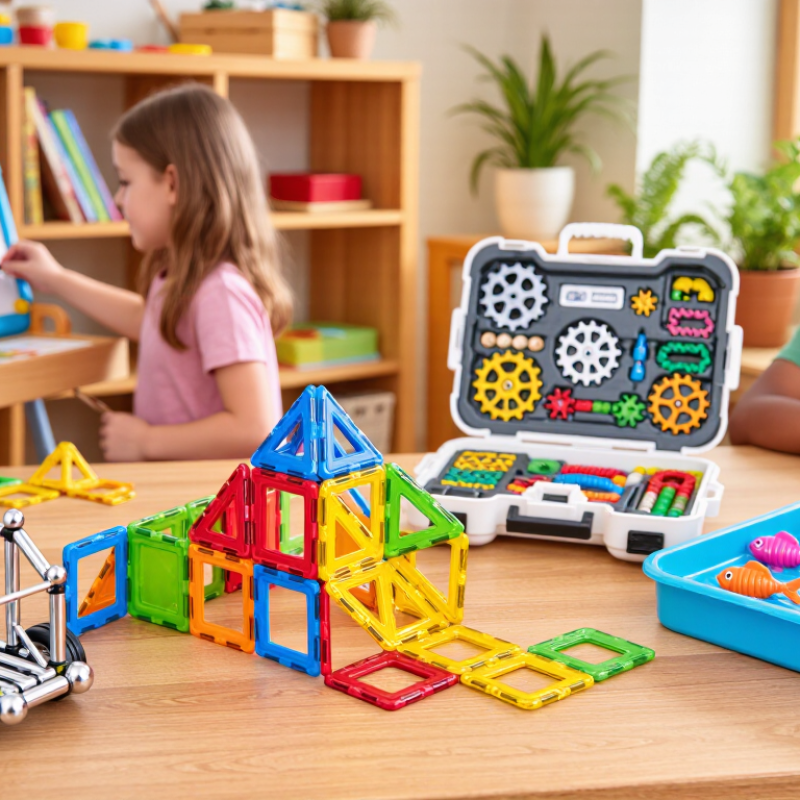
What Are the Top Types of Magnetic Toys in 2026? This question matters more than it first appears. Magnetic Toys now range from colorful construction tiles to compact STEM kits, magnetic drawing boards, travel games, and educational fishing sets. Each type offers a different kind of play. Some encourage open-ended building. Others strengthen hand-eye coordination through simple, repeated movements.
Toy expert Dr. Sherry Artemenko, founder of Play on Words, has often emphasized, “The best toys are those that grow with the child.” That idea fits Magnetic Toys especially well. A toddler may begin with large, easy-grip pieces. An older child might design bridges, animals, or working vehicles. The play changes. The magnets stay useful.
This guide examines the leading types available in 2026. It considers design quality, learning value, durability, and age suitability. Safety deserves equal attention. Small, high-powered magnets can create serious medical risks if swallowed, so responsible products need clear warnings, secure construction, and careful supervision. Parents should check product instructions and recognized safety certifications before buying.
Not every attractive set performs well. Some pieces connect weakly. Others feel repetitive after one afternoon. That is worth admitting. A bright package does not guarantee meaningful play. We will compare real strengths and limitations, including ease of use, storage, creativity, and value. The best choice may not be the largest set. It may be the one children repeatedly return to.
What Are the Top Types of Magnetic Toys in 2026?
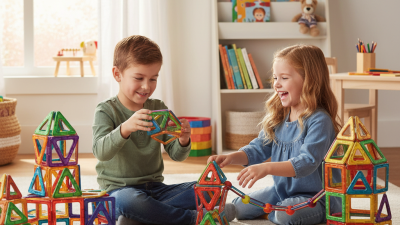
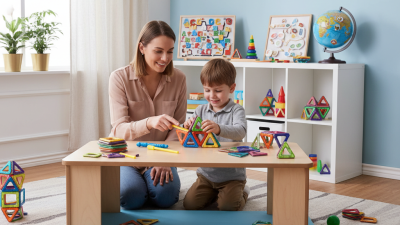
Magnetic building sets remain popular because children can turn loose pieces into towers, bridges, vehicles, and unusual shapes. Their structure depends on magnetic strength, connector placement, and piece geometry. Flat tiles encourage balanced walls, while rods and joints support frames with visible gaps. Children quickly notice that a wide base improves stability. That discovery feels practical.
Materials affect both play quality and safety. Durable ABS plastic is common for outer shells, while internal magnets should remain sealed securely. Smooth edges reduce discomfort during repeated handling. A well-designed set should state its recommended age and include clear safety guidance. Strong magnets require careful supervision around young children, especially those who may mouth objects. I have found that attractive colors can distract from weak construction. Appearance is not proof of quality. Learning benefits include spatial reasoning, planning, early geometry, and persistence. However, not every activity produces measurable progress immediately. Some children build randomly before explaining their choices.
Tips: Check for loose parts, sharp edges, and damaged coverings before play. Start with simple models, then invite children to redesign them. Ask, “Why did it fall?” rather than correcting the structure immediately. Store pieces in a dry container and keep them away from toddlers and pets. Choose open-ended sets that allow rebuilding, because repetition often reveals more learning than a perfect first model.
| Magnetic Toy Type | Basic Structure | Common Materials | Typical Age Guidance* | Primary Learning Benefits | Key Strengths | Important Considerations |
|---|---|---|---|---|---|---|
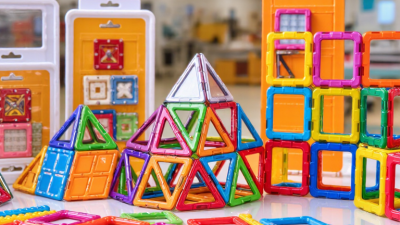
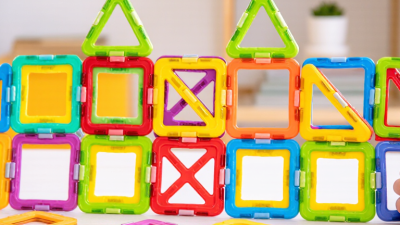
| Magnetic Tiles | Flat geometric panels connected along their edges to form 2D patterns and 3D structures. | Translucent or opaque plastic shells, internal magnets, and sealed or heat-welded edges. | Often 3 years and above; check the individual product safety label. | Shape recognition, symmetry, spatial reasoning, pattern creation, and early geometry. | Quick assembly, strong visual feedback, and easy expansion with additional shapes. | Large flat surfaces may be less suitable for highly detailed or narrow structures. |
| Magnetic Sticks and Balls | Rod-shaped magnetic pieces connect to small magnetic spheres or other nodes. | Plastic or coated rods, steel or magnetic alloy spheres, and enclosed permanent magnets. | Frequently intended for older children; age guidance varies significantly by piece size and design. | Engineering concepts, balance, angles, structural planning, and fine-motor coordination. | Supports flexible frameworks, geometric models, and more complex spatial designs. | Small components require strict supervision and secure magnet encapsulation. |
| Magnetic Blocks | Solid or hollow block units attach face-to-face to create walls, towers, and simple models. | ABS or other durable plastics, sometimes combined with wood or soft-touch outer coatings. | Commonly designed for preschool and early-primary play, subject to product labeling. | Basic construction, counting, sequencing, spatial vocabulary, and hand-eye coordination. | Easy to grasp and generally more stable for beginners than thin panels or rods. | Block shapes can limit diagonal forms and may use more storage space. |
| Magnetic Panels and Frames | Large rectangular, square, or triangular frames join to make walls, enclosures, and display structures. | Rigid plastic frames or panels with concealed ferrite or other permanent magnets. | Often 3 years and above, depending on panel size and construction. | Scale awareness, planning, spatial visualization, and collaborative problem-solving. | Builds relatively large structures quickly and can encourage group play. | Large structures may need a flat surface and can become unstable if overloaded. |
| Magnetic Marble-Run Sets | Magnetic supports hold tracks, ramps, funnels, and connectors for moving balls through a pathway. | Plastic track pieces, magnetic bases or connectors, and glass or steel balls depending on the set. | Usually intended for older children because of small moving parts. | Cause-and-effect reasoning, gravity, sequencing, testing, and iterative design. | Turns construction into an experiment with immediate results and opportunities for redesign. | Requires careful track alignment; small balls present an ingestion risk for young children. |
| Magnetic Mechanical Sets | Construction pieces combine with gears, axles, wheels, hinges, or moving joints. | Engineering plastics, metal axles or shafts, rubber tires, and enclosed permanent magnets. | Commonly aimed at school-age children; follow the specified age range. | Mechanical reasoning, systems thinking, motor planning, and problem-solving. | Connects magnetic construction with movement and introductory engineering principles. | More complex instructions and moving components may require adult guidance. |
| Magnetic Dress-Up and Character Pieces | Magnetic clothing, facial features, accessories, or character parts attach to a board or figure. | Printed coated card, laminated plastic, soft vinyl, and enclosed low-profile magnets. | Often designed for preschool play, with age limits based on piece size. | Storytelling, vocabulary, sequencing, creative expression, and fine-motor skills. | Accessible for imaginative play and can support guided language activities. | Pieces are usually not intended for load-bearing construction and can be misplaced easily. |
*Age guidance is a general category description, not a substitute for the safety information supplied with a specific product. Magnetic components should remain securely enclosed. Keep toys containing loose or detachable magnets away from young children and seek immediate medical attention if a magnet is swallowed.


+86-754-86986185

David: info@yo-yo.net.cn
Susan: sales8@yo-yo.net.cn
Eunice: sales3@yo-yo.net.cn
Vincent: st88@sixtrees.cn

David: +86 13118683999
Susan: +86 13829657827
Eunice: +86 13809675407
Vincent: +86 13592830482