Top 10 Dough Toys for Creative Fun and Learning Why Choose Them?
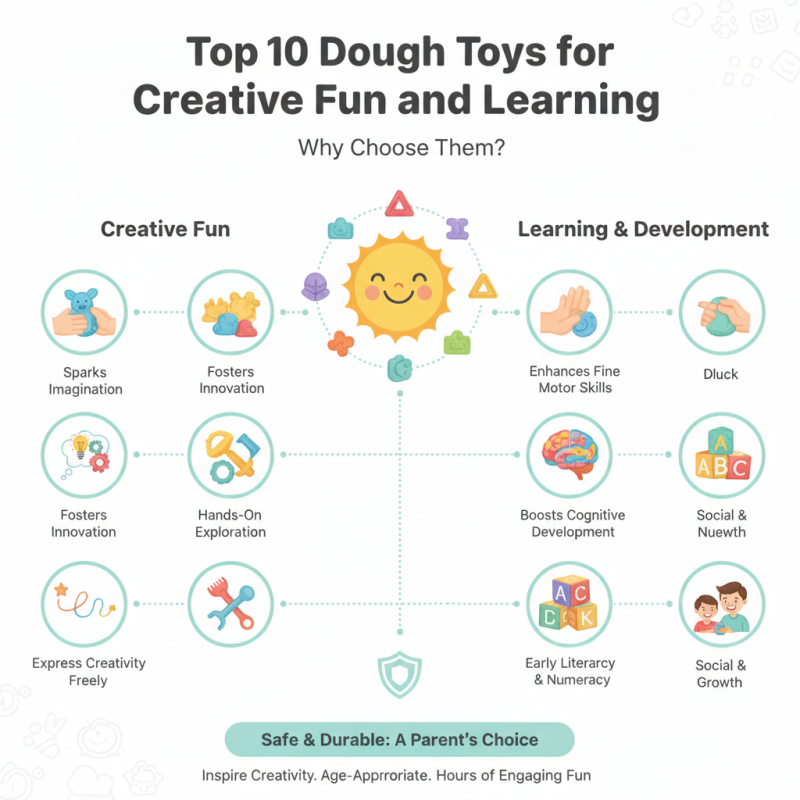
Dough toys offer a world of creative fun and learning for children. These tactile tools engage young minds, sparking imagination and innovation. Unlike screen-based activities, dough toys encourage hands-on exploration. Kids can mold, shape, and create, enhancing their fine motor skills.
As parents and educators, we often seek effective ways to support learning. Dough toys deliver on this front. They allow children to express their creativity freely, often leading to unexpected results. While the messiness can be daunting, it's a part of the creative process.
It's essential to choose high-quality dough toys that are safe and durable. Look for options that inspire creativity while being age-appropriate. With the right selection, dough toys can provide hours of engaging and educational fun, fostering both creativity and cognitive development in children.
Top Benefits of Using Dough Toys for Child Development
Dough toys are not only enjoyable but also enrich children's development. These tactile tools help enhance fine motor skills. As kids squish and mold, their hand strength improves. This skill is crucial for tasks like writing. Moreover, manipulating dough can boost hand-eye coordination, an essential ability for everyday activities.
Creativity flourishes with dough play. Children experiment with colors, shapes, and textures, fostering imagination. They can create anything their minds can envision. This open-ended play encourages problem-solving skills. Kids learn to face challenges when their creations don’t turn out as expected. It’s a safe space for trial and error, which teaches resilience.
Social interaction also benefits from dough activities. Children often play together, sharing ideas and resources. This teamwork builds communication skills and cooperation. However, not every child will thrive in group settings. Some may feel overwhelmed. That’s okay. Every child's journey is unique. Celebrating small successes can motivate them further.
Top 10 Dough Toys for Creative Fun and Learning
| Dough Toy Name |
Age Range |
Key Benefits |
Educational Value |
Price Range |
| Super Soft Dough Set |
3+ |
Enhances motor skills |
Creativity & Imagination |
$10 - $15 |
| Color Mixing Dough Kit |
4+ |
Teaches color theory |
Art & Science |
$12 - $18 |
| Dough Shape Cutters Set |
2+ |
Boosts shape recognition |
Math & Geometry |
$8 - $14 |
| Dough Rolling Pin Set |
3+ |
Improves coordination |
Fine Motor Skills |
$10 - $16 |
| Interactive Dough Playset |
5+ |
Encourages group play |
Social Skills |
$20 - $30 |
| Dough Animal Creation Kit |
4+ |
Fosters creativity |
Imaginative Play |
$15 - $22 |
| Dough Construction Set |
5+ |
Encourages problem solving |
STEM Education |
$18 - $25 |
| Dough Beneath the Sea Kit |
3+ |
Inspires ocean creativity |
Environmental Awareness |
$14 - $20 |
| Dough Art Studio Set |
6+ |
Develops artistic skills |
Creativity & Expression |
$25 - $35 |
Creative Play: How Dough Toys Foster Imagination and Innovation
Dough toys bring a unique spark to creative play. They stimulate the imagination and promote hands-on learning. Children engage in molding, shaping, and creating their worlds with these colorful materials. This tactile experience enhances fine motor skills. Kids learn to control their movements as they squeeze, roll, and flatten the dough. The act of creating is both fun and educational.
Playing with dough also encourages problem-solving skills. A child may want to build a specific shape or figure. They might struggle initially, leading to moments of reflection and creativity. What if they changed the design? This process of trial and error fosters innovation. Children learn to adapt and overcome challenges.
Moreover, dough toys provide opportunities for social interaction. Kids often play in groups, sharing tools and ideas. They learn to communicate and negotiate effectively. These experiences do not always go smoothly. Disagreements can arise over who gets to use certain colors first. However, navigating these situations teaches them valuable social skills. In a world focused on technology, dough toys remind us of the importance of hands-on creativity.
Educational Aspects: Learning Shapes, Colors, and Textures Through Dough
Dough toys provide a fantastic way for children to learn about shapes, colors, and textures. These hands-on activities stimulate creativity and curiosity. As children manipulate dough, they explore different shapes like circles and squares. This exploration enhances their spatial awareness. For young learners, this is an essential building block for early math skills.
In addition to shapes, colors come alive in the dough. Mixing different dough colors creates new shades, teaching children about color blending. Kids can create vibrant landscapes or animals, reinforcing their understanding of colors through play. Textures are another vital aspect. The squishy and pliable nature of dough introduces children to tactile sensations. They learn to describe their feelings about different textures.
When engaging with dough, allow children to lead their play. Prompt them with questions like “What will you make?” or “How does that feel?” This encourages independent thinking. Offer a variety of tools, like cookie cutters or rolling pins, to enhance their experience. Remember, mistakes are part of the learning process. If a creation collapses, use it as a chance to brainstorm solutions. Embracing imperfections fosters resilience and problem-solving skills in young minds.
Top 10 Dough Toys for Creative Fun and Learning
This chart illustrates the top 10 educational aspects of using dough toys for children's development. Each aspect is rated on a scale from 1 to 10 based on its effectiveness in promoting various skills such as creativity, motor skills, and social interaction.
Social Skills Development: Collaborative Play with Dough Activities
Dough activities offer a unique and effective way for children to develop social skills. When kids work with dough together, they learn to communicate their ideas. This collaboration fosters negotiation skills as they decide what to create and how to achieve their goals. Watching children share tools and space reveals their ability to work as a team, an essential skill for future success.
These sessions can also present challenges. A child might want to create one thing while another has a different idea. Navigating these conflicts can be tough. It requires patience and understanding. In this space, children can learn to voice their feelings and reconsider their approaches. Facilitating such discussions promotes empathy. Children begin to see the value in collaboration over competition.
Engaging in dough activities can sometimes lead to messiness and frustration with sticky situations. However, it is through these imperfect moments that kids learn resilience. They find ways to fix mistakes, adjusting their techniques or ideas. This process teaches them that learning involves trial and error, building confidence in their abilities.
Choosing the Right Dough Toys for Different Age Groups and Skills
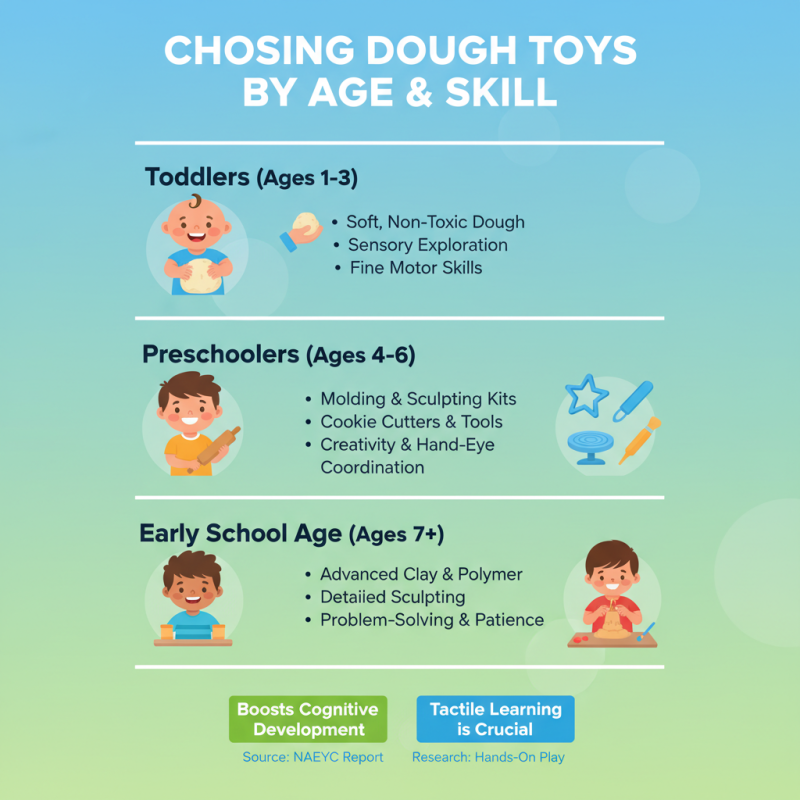
When selecting dough toys for children, age and skill level play a crucial role. For toddlers, soft, non-toxic dough is ideal. It encourages sensory exploration and fine motor skills. Research shows that engaging in hands-on play boosts cognitive development. A report from the National Association for the Education of Young Children highlights the importance of tactile experiences in early learning.
Preschoolers benefit from dough toys that promote creativity. Tools like rolling pins and cookie cutters enhance spatial awareness. According to the American Academy of Pediatrics, imaginative play fosters problem-solving skills. Encouraging children to create shapes helps develop hand-eye coordination.
Tip: Supervise younger children during playtime. Always check for small parts that might pose a choking hazard.
For older kids, complex dough sets with various components support advanced skills. They can learn about patterns, colors, and even basic math concepts. As children experiment, they build resilience. Some may find it challenging to replicate their ideas. This process is vital for personal growth.
Tip: Embrace the mess. It's part of the learning journey. A cluttered space often signifies creativity in motion.