China Best Clay Toys Manufacturers for Global Buyers

For global buyers, sourcing Clay Toys from China can provide access to varied materials, production skills, and customization options. The right partner, however, is not simply the factory with the lowest quotation. Buyers need to understand how a maker handles design files, color matching, sample approval, and repeat orders. Details matter.

A useful supplier review looks beyond polished product photos. It checks workshop capacity, workmanship, packaging, communication, and the maker’s ability to explain its quality-control steps. For handmade or modeled items, smooth edges, consistent proportions, secure attachments, and clean paint lines can affect appearance and durability. Samples help. Ask for recent samples and clear production timelines before placing a large order. If children are the intended users, confirm the material and product-safety documentation relevant to the destination market instead of relying on broad assurances.

This guide introduces China-based Clay Toys manufacturers and practical factors for comparing them. It considers product range, customization, minimum order quantities, sample service, quality checks, and export support. Buyers can use these points to discuss expectations early and reduce avoidable surprises during production. Not every maker will fit every project. Some details may only become clear after sampling, and that is worth admitting. The goal is a more grounded shortlist, not a promise of perfect results.
China Best Clay Toys Manufacturers for Global Buyers

What Clay Toys Are and How They Are Made

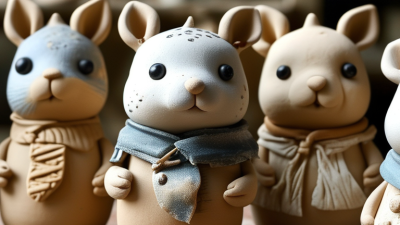
Clay toys are play objects made from moldable compounds or shaped natural clay. The term covers soft modeling dough, air-dry figures, and fired ceramic pieces. Their materials and finishing steps differ. A typical production line checks and blends ingredients, kneads the mixture to remove dry pockets, then presses or hand-shapes it into figures. Texture matters: a small animal should hold its ears without cracking. Natural clay pieces are dried slowly and may be fired; other compounds follow their own curing instructions. Not every clay toy is made the same way.

Quality checks should match the intended age and use. CPSC’s 2023 Toy-Related Deaths and Injuries report estimated 231,700 toy-related emergency-department visits in the United States, underscoring why manufacturers inspect toys for hazards. That figure covers toys broadly, not clay toys alone. Checks can include consistency, breakage, detachable parts, and age-appropriate labeling. Still, handmade details vary. A slightly uneven surface may be intentional, but weak joints need attention.

Tips: Ask suppliers for material specifications and test records. Check that colors do not transfer easily onto damp fingers, and that finished pieces resist ordinary handling. For air-dry clay, allow enough drying time; rushing can leave a damp center. A simple check, but easy to overlook.

China’s Clay Toy Manufacturing Landscape

China’s clay toy manufacturing landscape combines material preparation, molding, hand-finishing, decoration, and packaging across a broad supplier network. Production areas with established toy-making skills may also offer nearby printing, packaging, and freight services. This can simplify coordination, though factory capabilities vary widely. Details matter.

Clay toys may use air-dry compounds, modeling dough, or other pliable materials, each with different drying and storage needs. Buyers should request material specifications, age-grading information, and relevant test records. Check samples for odor, color transfer, cracking, and loose parts after ordinary handling. Photos alone are not enough.

Many suppliers can customize colors, shapes, and retail sets, but consistent decoration becomes harder at scale. Ask how workers control batch colors, measure fill weights, and inspect finished pieces. A factory visit or live production review may reveal details that documents miss. Small batches help. Yet they may not predict performance in a larger run. Reference samples, written acceptance criteria, and packaging checks give both sides a clearer basis for production. Some variation is unavoidable, so buyers should define acceptable differences before placing an order.

How to Evaluate Chinese Clay Toy Manufacturers

How to Evaluate Chinese Clay Toy Manufacturers

A polished sample is only a starting point. Ask how the factory controls clay recipes, pigment lots, drying time, and finished-product checks. Request current test reports that match the exact product, colors, and intended sales markets. For relevant markets, review testing against applicable parts of the ISO 8124 toy-safety series, including checks for chemical and mechanical hazards. Confirm that the laboratory is accredited for the tests performed. Paperwork can look perfect. Verify it.

The European Commission’s Safety Gate 2023 report recorded 3,412 alerts across consumer-product categories. This is a useful reminder that supplier checks should focus on evidence, not promises. Ask for batch traceability, written inspection records, and a clear process for handling failed tests. Then compare a fresh production sample with the approved sample: color, texture, seams, and packaging can shift between runs. Small differences matter.

A factory visit or independent audit can reveal storage conditions, calibration records, and whether rejected goods are separated. Ask who owns corrective actions and how quickly the factory reports a defect. Also check whether production capacity matches your order without subcontracting you did not approve. A single visit is not proof of lasting control. I would still treat any audit as a snapshot, not a guarantee.

China Best Clay Toys Manufacturers for Global Buyers — How to Evaluate Chinese Clay Toy Manufacturers

Use this supplier-evaluation framework to compare manufacturers without relying on unverified claims. Product requirements depend on the destination market, intended age group, materials, and design. Verify all certificates and test reports for the exact product and production site.

Evaluation Dimension What to Check Evidence to Request Good Evaluation Signal Weight
Product Safety Confirm the product’s intended age grade, material composition, small-parts risks, and applicable destination-market requirements. Product-specific test reports from a qualified laboratory; material declarations; age-grading rationale; and a list of applicable standards. Documents identify the same product, materials, and manufacturing site being quoted. 20%
Regulatory Compliance Check requirements for each target market. For example, toys sold in the EU are subject to applicable EU toy-safety rules; U.S. requirements may include applicable ASTM F963 and CPSIA provisions. Current compliance documentation, relevant test reports, tracking or traceability details where required, and a written plan for market-specific testing. The supplier distinguishes legal requirements by destination instead of presenting one certificate as universal approval. 15%
Material and Color Control Review clay or dough composition, pigments, additives, odor, texture, drying or hardening behavior, and batch consistency. Ingredient or material specifications, safety data where applicable, approved color references, and documented incoming-material checks. Material specifications are controlled and changes are communicated before production. 12%
Quality Management Assess inspection procedures for incoming materials, in-process production, finished goods, packaging, and corrective actions. Quality-control plan, inspection records, defect classifications, sample inspection reports, and corrective-action examples with sensitive details removed. Inspection criteria are defined before production and can be linked to the purchase order or product specification. 12%
Production Capability Confirm experience with the required product type, tooling or mold needs, color range, decoration, packaging, and expected order volume. Relevant product samples, a production-flow overview, equipment or process list, and confirmation of which steps are performed in-house or subcontracted. Capabilities are demonstrated with comparable samples and a clear explanation of production limits. 10%
Sampling and Specification Agree on dimensions, colors, weight, packaging, labeling, tolerances, and approval procedures before mass production. Signed or approved sample record, specification sheet, artwork proof, and written change-control process. The approved reference sample and specifications are used as the production standard. 8%
Order Terms and Capacity Clarify minimum order quantity, capacity allocation, lead-time assumptions, payment terms, and remedies for missed milestones. Written quotation, production schedule, capacity confirmation, and purchase-order terms. Commercial terms separate sample, tooling, production, and packaging costs and state assumptions clearly. 8%
Packaging and Traceability Check packaging suitability for shipping and retail, required warnings and labels, carton markings, and batch identification. Packaging specification, label artwork, carton details, and a sample traceability record linking a batch to production information. Packaging and traceability requirements are confirmed before shipment and match the destination market. 6%
Communication and Documentation Evaluate response clarity, document organization, language support, and how technical or quality issues are escalated. Named points of contact, a sample document pack, response-time expectations, and a written issue-resolution process. Answers are specific, consistent, and supported by records rather than broad assurances. 5%
Business Verification Verify the legal entity, registered business information, production address, and whether the contracting party matches the payment beneficiary. Business registration information, factory address, contract details, and independent verification appropriate to the transaction. Entity, site, contract, and payment details are consistent and independently checkable. 4%

Notable Chinese Clay Toy Manufacturers for Global Buyers

Notable Chinese clay toy manufacturers for global buyers are those that can show stable material control, repeatable shaping, and clear production records—not just attractive samples. Grand View Research estimated the global toys market at USD 324.3 billion in 2023 and projected a 4.3% compound annual growth rate for 2024–2030. This broad market estimate is not specific to clay toys, but it signals a competitive, expanding category. Buyers should ask whether a supplier works with air-dry clay, modeling compounds, or another material, and request samples from regular production. Feel the edges. Check for cracking, uneven paint, and loose decorative pieces.

A useful factory review includes material specifications, batch traceability, packaging tests, and test reports suited to the intended destination market. The OECD’s 2023 Due Diligence Guidance for Responsible Business Conduct also offers a framework for checking supplier practices and identifying risks across supply chains. A polished sample proves little on its own. I would compare it with a randomly selected production unit and record any differences; this step is easy to skip when deadlines tighten. Ask how the manufacturer handles rejected pieces, color changes, and replacement orders. Small details matter. Some suppliers may have excellent hand-finishing skills but limited capacity for large, consistent runs, so buyers should verify both before placing an order.

Sourcing, Safety Standards, and Quality Control for Export Orders

China Best Clay Toys Manufacturers for Global Buyers

Sourcing, Safety Standards, and Quality Control for Export Orders

Choosing a clay toy supplier takes more than comparing unit prices. Ask for material specifications, batch records, and recent test reports relevant to the product and destination market. Requirements can differ by age grade and intended use, so confirm them before approving production. Request a pre-production sample. Check its odor, color consistency, firmness, and drying behavior under ordinary room conditions. A tidy sample can still hide uneven production.

Tips: Send the supplier a written checklist. Include dimensions, color references, packaging details, and acceptable defect limits. Keep one signed sample for comparison.

During production, inspect several pieces from different cartons, not just the top layer. Look for cracks, sharp edges, loose parts, and clay that stains hands or surfaces. Ask how the factory controls moisture and storage; poor handling may affect texture or shelf life. For export orders, confirm carton counts, product labels, and test-document details before shipment. Independent testing may be appropriate, depending on the product and destination. Do not assume a single report covers every version. That part is easy to overlook.