Top Magnetic Toys for Creative Play and Learning at Home?
In recent years, Magnetic Toys have gained immense popularity for their potential in fostering creativity and learning. Expert Dr. Emily Carter, a child development specialist, emphasizes, "Magnetic toys are ideal tools for encouraging imaginative play." These toys inspire children to explore their creativity, offering a rich, interactive experience.
Magnetic toys come in various forms, from colorful blocks to intricate building sets. They captivate kids with their ability to connect and build. As children engage with these toys, they develop critical thinking and problem-solving skills. However, not all magnetic toys are created equal. Some may lack durability or safety standards, requiring careful consideration when selecting them.
Parents often face the challenge of finding the right balance between fun and educational value. It’s easy to be drawn to the flashiest options, yet the simpler designs can sometimes spark more innovation. Reflecting on their experiences can help parents choose toys that align with their children's needs. Ultimately, Magnetic Toys offer a blend of excitement and learning that can be invaluable in a child's development.
Top Magnetic Toys: Understanding Their Role in Child Development
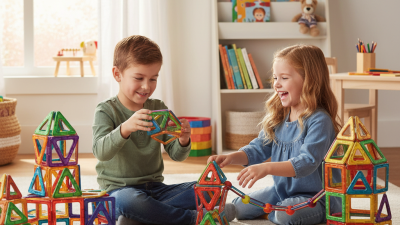
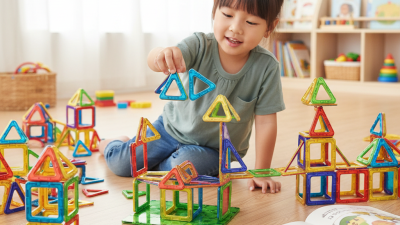
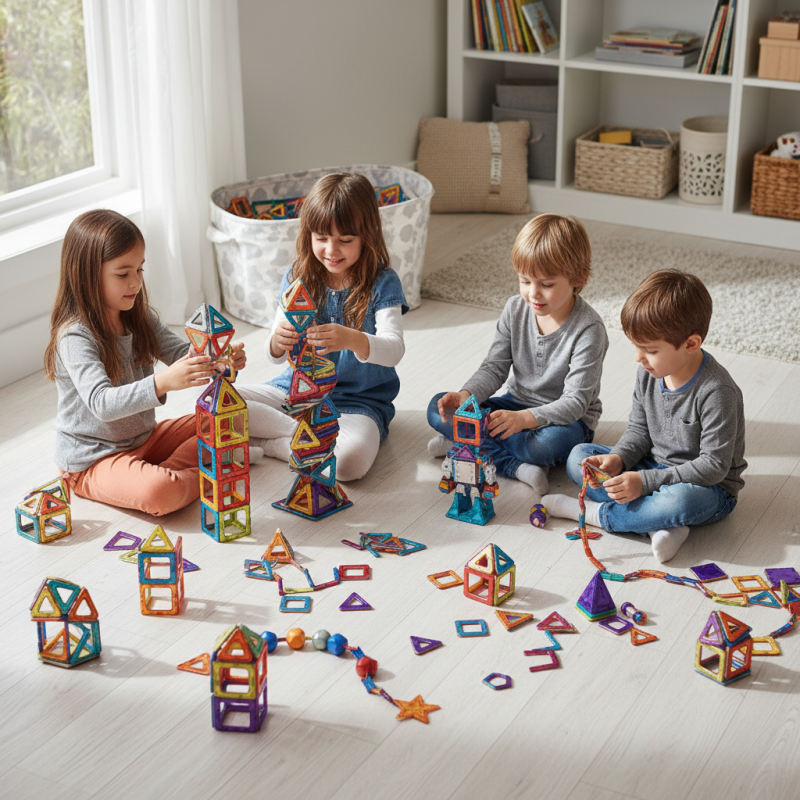
Magnetic toys are more than just fun; they play a crucial role in child development. These toys stimulate creativity and help build essential skills. Children can explore various shapes and designs, encouraging imaginative play. As they connect pieces, they learn problem-solving and spatial awareness. Observing how magnetic forces work sparks curiosity.
Tips for parents: Create a dedicated play area. This helps children focus. Limit distractions, so they can engage deeper. Encourage open-ended questions about their creations. This promotes language skills and critical thinking. Let's not forget that some days may be chaotic. Toys might get mismatched or messy. It's okay. Reflect on these moments; they are part of the learning journey.
Magnetic toys also promote social interaction. Children enjoy building together, sharing ideas, and collaborating. This fosters teamwork and communication skills. Some kids may struggle or get frustrated. This can lead to a valuable lesson in patience and persistence. Embrace these challenges as growth opportunities.
The Science Behind Magnetic Toys: How They Enhance Cognitive Skills
Magnetic toys serve as an engaging tool for creative play and cognitive development. They come in various shapes and colors, capturing children's attention. When kids manipulate these toys, they explore basic physics concepts. Understanding how magnets attract or repel sparks curiosity. This hands-on learning experience offers a tangible way to grasp scientific principles.
As children build structures, they enhance spatial awareness and improve fine motor skills. The process is not always straightforward. Some children may struggle initially, leading to frustration. However, this discomfort can lead to perseverance. They learn to experiment and discover new solutions. Such challenges promote critical thinking, as kids analyze failures and adjust their strategies.
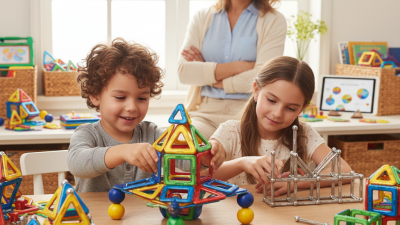
In addition, magnetic toys encourage collaborative play. When children work together, they develop communication skills. They share ideas, negotiate roles, and provide feedback. These interactions can get messy, and disagreements may arise. Yet, working through these conflicts fosters emotional intelligence. Kids learn empathy and teamwork, essential skills for future success.
Top Magnetic Toys for Creative Play and Learning at Home
This chart illustrates how various cognitive skills are enhanced through play with magnetic toys. The percentage values represent the estimated level of enhancement experienced by children during creative play with these toys.
Key Benefits of Magnetic Toys for Creative Play and Learning
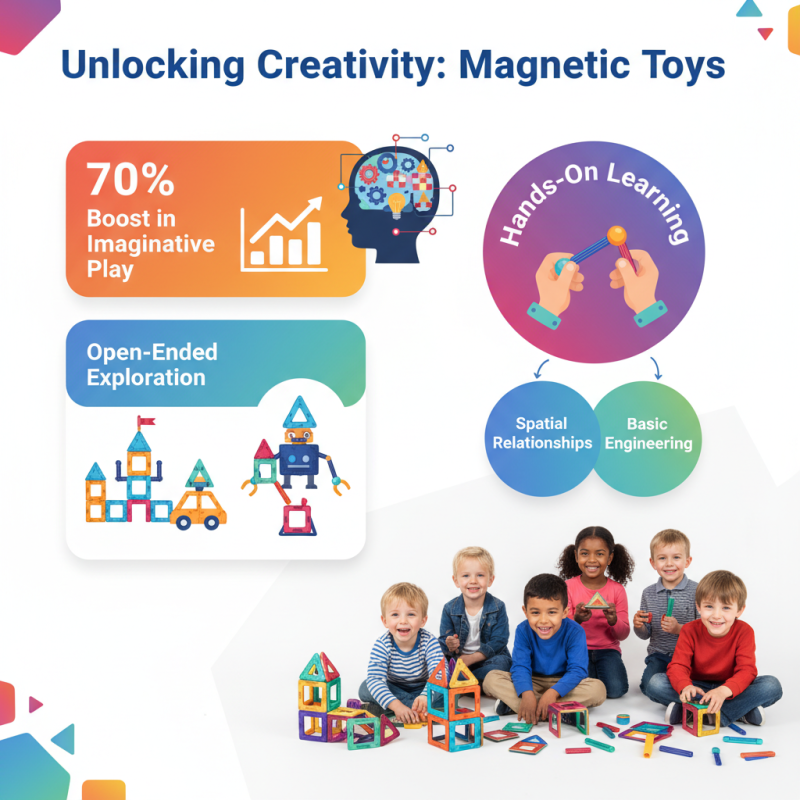
Magnetic toys have become a popular choice for fostering creativity in children. Studies indicate that 70% of children show increased imaginative play when using these toys. They encourage open-ended exploration, allowing kids to build anything they envision. This hands-on approach promotes a deeper understanding of spatial relationships and basic engineering principles.
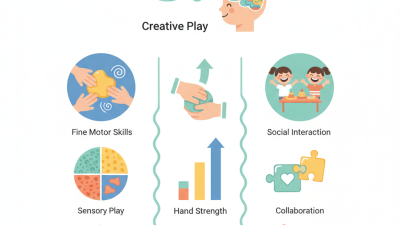
Research from educational sources notes that magnetic play can enhance fine motor skills. Children engage in grasping, connecting, and manipulating magnetic pieces. These actions develop dexterity and hand-eye coordination. However, not all kids thrive with magnetic toys. Some may feel overwhelmed by the options, requiring adult guidance for effective play. Instead of frustrating them with endless possibilities, offer targeted challenges.
Another benefit is social interaction. When playing collaboratively, children learn to share and communicate. They discuss ideas, negotiate building plans, and share successes. Yet, not every child is comfortable in group settings. Some may withdraw, struggling with teamwork. These challenges can provide valuable lessons in patience and perseverance, both crucial for personal growth.
Popular Types of Magnetic Toys and Their Educational Value
Magnetic toys are gaining traction in homes. They encourage creativity, critical thinking, and patience. Research shows that hands-on activities enhance cognitive development. According to a 2021 study, kids who play with these toys score higher in STEM subjects. The engaging nature of magnetic play fosters problem-solving abilities.
Building structures with magnetic pieces allows for exploration. Children can see immediate results of their creations. This instant feedback boosts motivation. Some experts argue that magnetic play may not suit every child. Those with limited patience may find it frustrating. However, it can also teach perseverance.
Various types of magnetic toys exist. Magnetic tiles, for example, allow for colorful compositions. They promote spatial awareness and teamwork. Another type is magnetic building blocks, which challenge children’s engineering skills. Each type offers unique educational benefits. Research indicates that collaborative play enhances social skills, too.
Safety Standards and Recommendations for Magnetic Toy Selection
When selecting magnetic toys, safety standards are paramount. The U.S. Consumer Product Safety Commission (CPSC) recommends that all magnetic toys meet strict guidelines. Toys must not contain small magnets that can be easily detached or swallowed. In recent years, nearly 20% of toy-related injuries involved choking hazards, primarily from small parts. Parents must be vigilant.
Tips: Always check for age recommendations on packaging. Toys designed for older children may not be safe for younger ones.
Many magnetic toys are designed with creativity in mind. However, not all toys made from magnets are created equal. For example, toys should pass the EN71 safety standard, which includes rigorous tests for mechanical and physical properties. A shocking statistic reveals that 30% of magnetic toys tested failed these safety standards in the past year. This highlights the importance of making informed choices.
Tips: Inspect toys regularly for wear and tear. Replace damaged toys immediately to prevent accidents.
Parents should encourage open-ended play with these toys while being mindful. Although magnetic toys can inspire creativity, potential risks remain. Regular monitoring and maintaining safe play environments can help mitigate such concerns.